
Ladies In Collision: Bella Romero, Tarrant County College Instructor
by Alana Quartuccio
Our Ladies in Collision column returns with a spotlight on a passionate collision repair professional who not only lives for fixing cars, but also for inspiring and guiding up and coming repair professionals into the fold! Read on to learn what led Tarrant County College’s Bella Romero to pursue a path into collision repair!
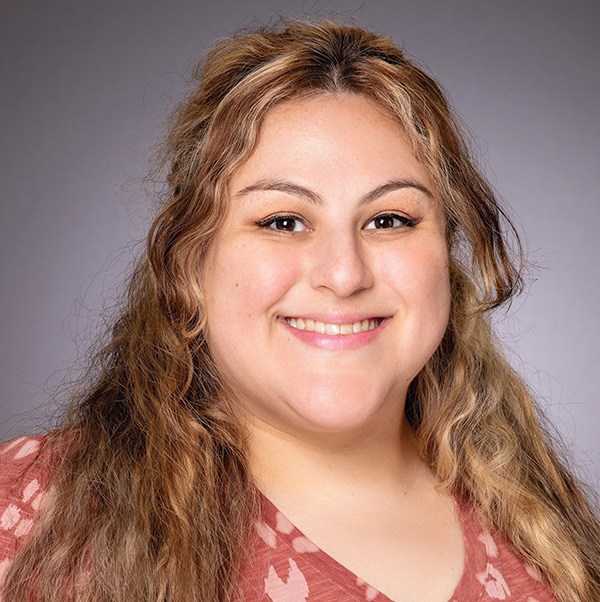 Texas Automotive: Bella, Please tell us how you got started in the industry.
Bella Romero: I got started in the automotive industry because of my dad. He was in the collision repair industry, so growing up, vehicles and the body shop were always a part of my life. I was exposed to the industry at a young age, and watching my dad work on vehicles gave me an appreciation for the trade and the skills that go into repairing a vehicle.
Working around cars was always something I wanted to do, but like many people, my path wasn’t completely straight. Eventually, I came back to that passion when I went to college and earned my degree in automotive service. That education gave me a stronger technical foundation and helped me realize that working in the automotive industry was where I really wanted to be.
After college, I went to work for the City of Fort Worth, where I worked on and maintained vehicles. That experience was especially valuable because I was able to work on a wide variety of vehicles and gain hands-on experience in a professional environment. It taught me a lot about diagnostics, repairs, responsibility and the importance of keeping vehicles safe and dependable.
From there, I continued to find my way back toward collision repair. Looking back, I think my dad planted the seed when I was young, but eventually I chose to make the automotive industry my own path.
What started as something I grew up around became something I genuinely wanted to pursue. Today, I am grateful that I followed that path because it has given me the opportunity not only to work in an industry I love, but also to teach others and help the next generation discover their own passion for collision repair.
TXA: What is your current role?
BR: Today, I am a Collision Repair and Refinishing instructor at Tarrant County College, where I teach and prepare the next generation of collision repair professionals.
Looking back at my experience, I think becoming an instructor was almost a natural combination of the two worlds I grew up in. My dad was a Master Technician, so from him I learned the importance of technical skills, problem-solving, hard work and taking pride in what you do. My mother was a teacher, so from her I learned the value of education, patience, communication and helping others learn. I feel like I truly got the best of both worlds.
I always knew that I wanted to work in the automotive industry, but I don’t think I fully understood until later how much I would enjoy teaching and helping others develop their skills. Now, I get to combine the technical side that I learned from my dad with the teaching side that I learned from my mom.
My role allows me to teach everything from metal repair and welding to refinishing, color theory, surface preparation, safety and current industry practices. But more importantly, I get to help students build confidence and see a future for themselves in this industry.
I feel very fortunate to be able to take what my parents gave me and use it to help the next generation. My dad taught me how to work on vehicles, my mom taught me how to teach, and now I get to bring those two lessons together every day in the classroom.
TXA: What about this industry do you love the most?
BR: What I love most is that there is always something new to learn. Collision repair combines so many different skills: Understanding vehicles, materials, technology, structural repair, metalworking, welding, refinishing, color, safety and sometimes even a little bit of psychology when you’re working with a customer.
I also love the transformation. There is something very rewarding about taking a vehicle that has been damaged and returning it to the road safely and looking like new again.
Another thing I really love about this industry is the people you meet along the way. You build relationships with technicians, painters, instructors, manufacturers, vendors and other professionals who can become mentors, friends and valuable connections. The people you meet can help you grow, open doors to new opportunities, and encourage you to keep learning and improving. And now that I’m an instructor, I get to give some of that back. I get to take what
I’ve learned from the people who helped build me and pass that knowledge on to my students.
For me, collision repair is about much more than repairing cars. It’s about learning, creating, solving problems, building relationships, helping people, and being able to look at something at the beginning of the process and feel proud when you see what you’ve accomplished at the end.
TXA: Women are certainly no stranger to this industry but unfortunately that doesn’t mean women haven’t faced challenges along the way. What are some of the biggest challenges you believe women face and have you faced any yourself? If so, what did you do to overcome them?
BR: I think one of the biggest challenges women can face is having to prove themselves before they are given the opportunity to show what they can do.
Collision repair has historically been a male-dominated industry, and sometimes people make assumptions based on appearance or gender rather than skill and ability. I have experienced situations where I had to demonstrate my knowledge and abilities before I was taken seriously.
The way I learned to handle that was simple: let my work speak for me.
I focused on learning everything I could, asking questions, gaining experience and continuing to improve my skills. I didn’t feel like I needed to change who I was to fit into the industry. Instead, I learned to be confident in what I brought to the table.
I also think it’s important for women entering this field to understand that they don’t have to know everything on day one. The best technicians, instructors and professionals I know are constantly learning.
There will always be challenges, but those challenges can also make you stronger. Every time you overcome one, you gain confidence for the next one.
TXA: What is something you think all women should know about the world of collision repair?
BR: I would tell women that there is absolutely a place for you in this industry.
You don’t have to fit a certain stereotype to be successful in collision repair. You don’t have to be the biggest or strongest person in the shop. You need to be willing to learn, work safely, pay attention to detail and take pride in what you do.
Collision repair has also changed tremendously. Today’s industry involves advanced materials, electronics, ADAS technology, aluminum, high-strength steels, composites, computerized color matching, waterborne coatings and constantly changing vehicle technology.
There are also many career paths beyond being a technician. Women can become estimators, production managers, painters, body technicians, parts specialists, instructors, shop owners, technical representatives, sales representatives, managers or work in manufacturing and education. Don’t limit yourself to what you think a collision career is supposed to look like.
TXA: What do you think women in particular bring to the industry?
BR: I think women bring a different perspective, but I don’t think we should limit that to one particular quality. Women bring technical ability, attention to detail, communication skills, organization, creativity, problem-solving, leadership and determination – just like men do. One thing I have noticed is that women can bring a strong attention to detail and a different perspective when it comes to quality and customer service. But ultimately, what matters is the individual. I also think women who enter this industry can have a tremendous impact on the next generation simply by being visible.
When a young woman walks into a collision program and sees another woman teaching, repairing vehicles, welding, refinishing, managing a shop or leading an organization, she can look at that person and say, “I can do that too.” That representation matters.
TXA: What’s life like outside the body shop? Do you have any interesting hobbies you’d like to share?
BR: Outside of the body shop and classroom, I enjoy spending time with family and friends and finding opportunities to get away from the day-to-day demands of work. One of the things I really enjoy is traveling and discovering new places. I love being able to go somewhere I’ve never been, experience different cultures, see how other people live and learn about things I haven’t experienced before. For me, travel isn’t just about visiting a new destination – it’s about the opportunity to learn something new and step outside of what I’m familiar with.
I’m naturally curious, so I enjoy learning about things I’ve never done before. Whether it’s trying a new activity, visiting a place I’ve never seen, meeting new people or simply learning something I didn’t know before, I enjoy those experiences. I think that curiosity has also carried over into my career because the collision industry is constantly changing, and there is always something new to learn.
Of course, working around vehicles has become such a big part of my life that it’s hard to completely separate myself from the automotive world! I still enjoy anything involving cars, learning new techniques, and attending automotive events and training opportunities.
For me, life outside the body shop is about experiencing new things, continuing to learn and making memories along the way. I think that’s what keeps life interesting – there’s always another place to discover, something new to learn or something I’ve never tried before.
TXA: What encouraging words would you give to other women interested in entering the world of collision?
BR: Go for it! If you are interested in cars, working with your hands, technology, creativity, problem-solving, or simply want a career where you can see the results of your work, collision repair can be an incredible career. Don’t worry about being the only woman in the room. Don’t worry about not knowing everything. Don’t worry about what someone else thinks you should or shouldn’t be doing.
Learn. Ask questions. Get your hands dirty. Make mistakes. Learn from them. Keep improving. Find people who will support you and mentors who will challenge you to become better. Most importantly, don’t be afraid to take up space in an industry where you may not see many people who look like you. My own journey started with my dad introducing me to this industry. What he gave me was an opportunity to see what was possible. I eventually made that path my own. Now, one of the things I am most passionate about is helping the next generation – especially young women – see that they belong here too.
You don’t have to wait for someone to give you permission to belong in this industry. If this is something you love, there is a place for you here!
Want more? Check out the November 2026 issue of Texas Automotive!