
ABAT Wants to Know: What Are You Doing Differently?
by Burl Richards, ABAT President
What’s on my mind this month? Honestly, I’ve been thinking a lot about the same thing that’s on a lot of folks’ minds – and possibly yours too! Business is slow. Really slow. Slower than it’s been in a long time.
 Why’s this happening? I believe a combination of factors are playing a role in the lack of vehicles making their way into our shop, as I discussed in my April message (which is available at grecopublishing.com/txa0425presmessage).
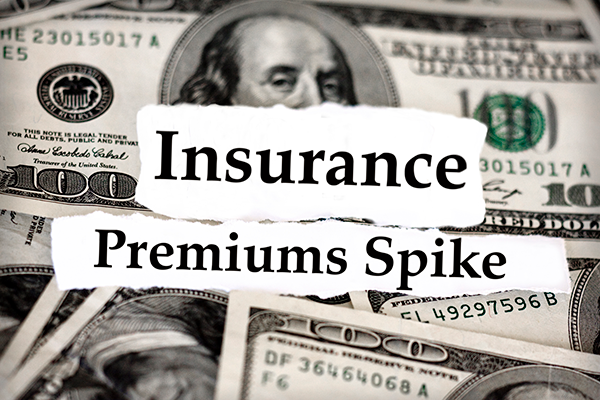
Based on conversations I’ve had with industry leaders, it seems like the hike in insurance premiums is a significant factor; in fact, premiums have increased by over 55 percent since February 2020, according to the US Bureau of Labor Statistics. And in Texas, that cost is expected to rise another six percent this year! With premiums already going up, policyholders are reluctant to file a claim because they’re afraid their carrier will increase that premium even more. They aren’t wrong – after the last time I filed a claim, my premiums increased for three years, at which point I’d paid the same amount in higher premiums that it would have cost to pay for the repairs myself!
Policies are also offering higher deductibles which makes people less likely to file a claim, especially if the vehicle is still driveable. That fear of submitting claims to insurers is driving up the prevalence of customers paying out of pocket. For the last few years, more substantial claims (as much as $15,000!) are being paid by the customers directly without ever involving their insurance carrier.
Claim counts are also down because of ADAS features which are preventing some accidents. Although the cost of those features makes the repairs more expensive, fewer cars need to be repaired. Couple that with inflation and interest rates going up, and we’re seeing a 20 to 30 percent reduction in market sales.
Shops that want to stay in business need to be aware of these trends, but they also need to figure out how to address the challenges that are arising. I’ve talked to some shops that rely heavily on DRP relationships, but they’re really slow as well. I’d love to know what OEM-certified shops are seeing and if shops with fleet accounts are experiencing the same downturn. I suspect that OEM certifications are starting to really pay off for some shops that have been making those investments for nearly a decade, but I’m curious what other shop owners believe. (And I’m specifically interested in feedback from shops with standard OEM certifications; those that are certified in luxury vehicles have a different business model that may not apply as broadly.)
Is your shop feeling the pinch? If so, what are you doing about it? Have you changed any of your business practices as a result? Are you still asking for all the OEM procedures that are needed to properly repair your customers’ vehicles?
If you’ve managed to avoid the reduced workload that most of us are seeing, how did you do it? What is your shop doing differently? Was there a weather event that’s adding to your workload?
ABAT wants to know what you’re doing! Most shops are still doing their best to make sure vehicles are being repaired properly, but with the market slowing down so much, a lot of people are stuck and need a little inspiration! And we’d love to help, so please share your secrets to success with ABAT Executive Director Jill Tuggle (jill@abat.us).
After all, our industry is stronger when we all work together and help one another. That’s why you’re reading this article; it’s why you’re a part of ABAT. You want to do better in your business, and when one of us does better, we can all do better by coming together and sharing ideas. There’s no better place to share ideas and get inspired than at the Texas Auto Body Trade Show, taking place September 12-13 at the Marriott Dallas Allen Hotel & Convention Center in Allen, TX (details at abat.us/trade-show).
Want more? Check out the June 2025 issue of Texas Automotive!
>