
Ladies in Collision: Amber Alley, Barsotti’s Body and Fender, CA
by Alana Quartuccio
This month, we take our Ladies in Collision feature all the way to the West Coast. Chances are you already know Amber Alley (Barsotti’s Body and Fender; San Rafael, CA), who is known throughout the industry for her work with the Society of Collision Repair Specialists (SCRS) and the Collision Industry Conference (CIC). Most recently, she has been appointed to serve on the Collision Industry Foundation’s (CIF) Board of Trustees. She has also been the general manager of a California body shop for the past 17 years. Alley loves challenges and has great passion for this industry. Read on to learn more about her journey into collision repair and national association work.
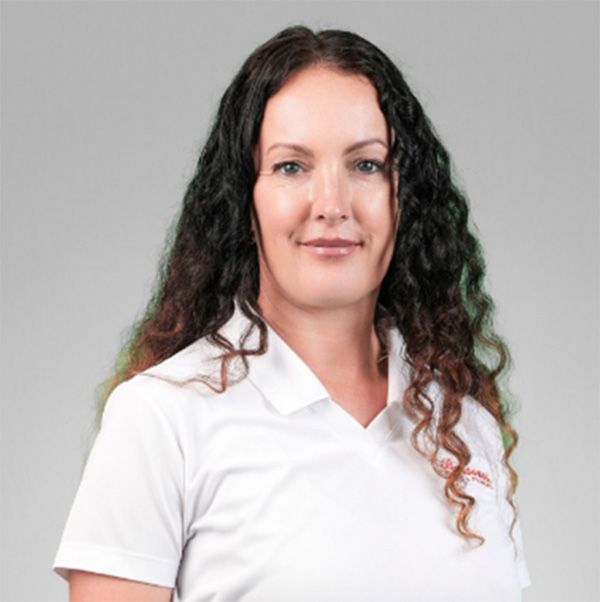 Texas Automotive: What was your first introduction to the auto body industry?
Amber Alley: It started with the need to get a job. I began working in an office at a shop, answering phones, while I went to school at night. I was going to school for business finance with an economics minor. Collision was not on the bingo card. The owner would have me shadow him inspecting customers’ damaged vehicles and I would go back to the office and look up the labor times from these big Mitchell estimating books and fill in the estimate form by hand. It was meticulous, but fun. I learned so much that year. After I left that shop, I tried to work in retail, but quickly found myself back in the collision space. I look back on that time in my life and smile; it really turned out how it was supposed to.
TXA: What made you decide to devote your career to collision repair?
AA: I think most people are here in this industry because they like a challenge…and there is always a challenge. I love a challenge; I also love working with a team to create something meaningful. Helping people in their time of need is very rewarding. Being able to turn a very bad, stressful situation for someone into something positive is amazing.
TXA: What led you to become general manager?
AA: I didn’t want the general manager role, at first. The company needed someone to fill the role, and they approached me about it. I had been serving as a pillar, holding the company up between managers, but I did not intend to put my name in for the position. When they approached me about it, I initially said no. It’s a challenging business. Turnover in that role is pretty common at many organizations, especially back in the ’90s and 2000s. I think nowadays we’re seeing more poured into the management glass in terms of training and professionalism to grow that role.
But back then, there wasn’t really a game book about it. I thought about the six impressive people who did the job prior and asked myself if I could do it. I was not in it for the title. I just wanted a good life and to be able to put food on the table. I didn’t want the pressure, but ultimately, I decided to do it. I’ve been the general manager for 17 years now. We’ve grown from 12 employees to 41 since I started. We expanded from one small building to four, and we now have 28 OEM certifications. I do a lot of travelling these days, but I’m still happiest when I’m in the shop with my team, dealing with negotiations to get paid for something or figuring out how to do something better. I love that part of my job.
TXA: How did you get involved at the national level?
AA: Mark Allen of Audi pushed me to get involved. My shop was among the first to become certified with Audi and Porsche. Feeling stuck in my own bubble at the local level, I reached out to him about an issue involving aluminum repairs. One day, he happened to make a spot visit to my shop, where he filled me in on a related aluminum repair discussion that went on at a CIC meeting he just returned from. He suggested that I get involved with SCRS because he believed that I’d make a great asset to the industry. He gave me contact information for Ron Reichen and Aaron Schulenburg. I wound up contacting them, and I attended a couple of SCRS meetings and found everyone was very supportive.
At first, it felt like it was out of my league. I was intimidated hearing them talk about things I hadn’t been aware of. I asked myself, ‘Have I been in a hole here, or what?’ (laughs) But I was also really intrigued. I like challenges, so I found it really interesting. I bought into OE certifications and doing it right for the customer very early on. The more time I spent with people at SCRS meetings, the more I realized they weren’t any different from me. We’re all the same, whether we had a small shop, big shop, whether we are OEM certified or not. I really felt like I had found my people. Shops can feel very alienated at times, but we all deal with the same frustrations. I ran for a position on the SCRS board and didn’t get voted in that first time but was later appointed. Now, here we are 11 years later, and I am the immediate past chair. So, we took it all the way through.
TXA: Your work with SCRS has you travelling all over the country. Hopefully, we will see you at the Texas Auto Body Trade Show at some point.
AA: I love the people in the industry. I love my team. My focus has been to make the industry better for the people in it and bringing everybody up with us. I do travel a lot, and I have a lot of obligations. I’m also a mother of two daughters and run my shop. Jill has invited me to attend the show and the Ladies Night event in the past; I was unable to attend due to other obligations, but I hope to make it to the Texas Auto Body Trade Show soon. I hear it’s a great show!
TXA: What are some of the biggest challenges women in the industry face?
AA: I’ve been in the industry 32 years now, so there’s not much I haven’t seen. But I don’t think challenges are necessarily due to being a woman. Especially with young women, I feel it’s more about confidence. I think confidence grows over time. I remember being in that SCRS room for the first time, and although I had 20 years of experience by then, I still didn’t feel like I necessarily belonged. I have since found out that every new board member feels that way. It was easy for me to attribute that to being a woman, but the truth is, that had nothing to do with it. I think it can be a challenge for any man or woman in any role to be confident, own their space and not hold themselves back. I’ve had a great experience. I worked at two shops before this one, and both owners poured a ton of time and energy into helping me be successful. They also treated and paid me well. I am also very aware that this is not the reality for some and my intentions aren’t to ignore that fact.
I’ve interviewed young men and women who’ve shared their frustrations about why they haven’t been hired at other shops or why they are looking to leave their current shop. Whether they are male or female, none of those scenarios are right. It’s not a gender-bias issue, but rather an industry problem. I also think society tends to look down on young people, and many don’t believe they can contribute much. It’s about perception. Yes, it may appear to be a male-dominated field, and some think that’s a reason to leave the industry, but if they do that, it’s their loss. I do believe there are still some challenges, but it’s gotten way better than it was when I first got into the field. There are endless possibilities now for women. You just have to be confident and not take crap from anyone.
TXA: What about this industry do you love the most?
AA: I love the people in it. I meet a lot of real-salt-of-the earth folks. When I went to college, I thought I’d probably wind up going into banking, finance or interior design, which was something I was interested in then. As I look back, I think maybe I could have made money in finance, but I could have lost a lot, too. Would I have been happy in a cubicle with a bunch of people in suits all day? Hell, no! I chose a path that gave me a very happy life surrounded by great people. I reach out to industry people outside the shop several times a day. I consider them friends. In other industries, you just don’t have that kind of network. I love being able to call Jill here in Texas if I need something, and she’ll stop what she is doing and find you an answer or connect you with someone. I’ve heard people outside the industry comment that we have an amazing industry full of people who really care. I think that reflects on all of us with our quality of life. When you are at industry events, the people on the collision side seem genuinely happy to be there. I just don’t think you see that elsewhere.
TXA: What’s life like outside the body shop? Do you have any interesting hobbies you’d like to share?
AA: My daughters are in college. I spend time with friends and travel a lot. What I do requires a lot of work and does absorb a lot of my time. The industry has been good to me, and I want to leave it a little better than I found it. Sometimes, I wonder if it’d be different if I didn’t have such amazing people to mentor and support. There’s so many people I have met over the years who I still keep in touch with like they are family members. People have commented to me that it seems like a lot of work and it’s all volunteer work, but it makes life a lot more fulfilling.
TXA: What encouraging words would you give to other women interested in entering the world of collision?
AA: Don’t be intimidated. Listen to your gut and don’t underestimate your ability. One thing I tell a lot of people who work here – men or women – is ‘don’t second guess yourself.’ You have to learn something well enough to be confident about it. A painter, for example, should get really good at prep first. It’s like cross-training. Never feel like a job is below you. For young women, it’s especially important to know you can learn the most in the parts department. It’s literally the heart of the shop. In a lot of shops, that can be dusty and dirty, but just roll up your sleeves.
It’s not going to be easy, but you have got to learn, master and get confident before you move on to the next thing. If you do that, you will continue to grow. It can be intimidating for women in a male-dominated industry, but you’ve got to get in there and weld, paint or write estimates to feel confident about it. There are still some things that make my eyes glaze over, but my technical ability has gotten pretty sound at this point of my career. It’s not something that excites me like education or training does. You have to find what makes you passionate. You don’t have to be an expert at everything to have a seat at the table.
Want more? Check out the January 2026 issue of Texas Automotive!