

A Well-Oiled Machine: Joe Ocello Takes the Helm of AASP/NJ’s Mechanical Division
by Alana Quartuccio
In an effort to grow its mechanical division, AASP/NJ recently welcomed veteran automotive repair and gasoline retail business professional Joe Ocello as its mechanical division executive director.
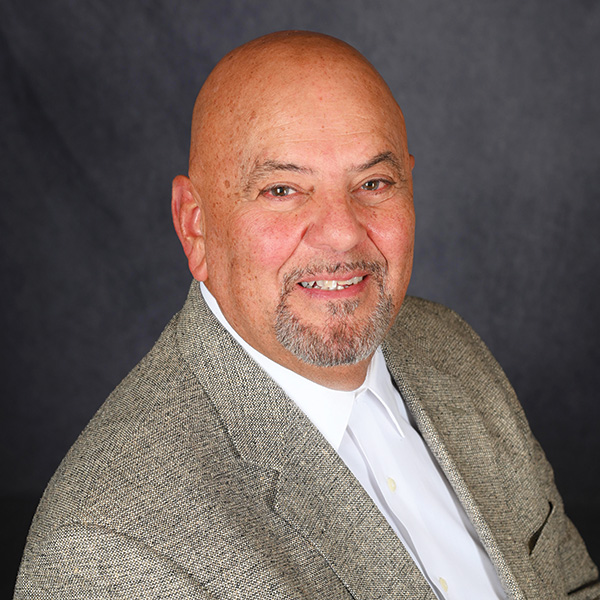 The former head of the New Jersey Gasoline-C-Store Association (NJGCA) brings decades of experience to AASP/NJ, having owned and operated automotive repair and gas businesses for 46 years. He has multiple accreditations to his name, including ASE Master Technician, service consultant and under-car specialist certifications.
AASP/NJ President Ken Miller expressed his excitement about bringing Ocello on board. “Joe brings valuable insight and energy to the association, and we look forward to working with him as we strengthen and grow AASP/NJ’s mechanical division. His leadership will be instrumental in expanding support, resources and advocacy for mechanical repairers across the state.”
New Jersey Automotive sat down with Ocello to learn about his past experiences and discuss how they will help AASP/NJ achieve its goals for its expanding mechanical division.
New Jersey Automotive: What industry experience do you bring to your role as mechanical executive director of AASP/NJ?
Joe Ocello: I’ve spent 46 years in the mechanical field. I’ve always been a mechanic; I was trained by my father when I was just a kid. During my career, I went through a lot of training, and I had to retrain as new technologies came in from the 1970s to the 1980s, then from the 1980s to the 1990s and so on and so forth. About 30 years ago, I got my ASE master technician certification. I also hold service consultant and under-car specialist certifications. I’ve also had the opportunity to mentor and teach high school and vocational school students. They’d work part time for me as they went through school, and I’d help them with their studies and to get their certifications.
NJA: Many may think of AASP/NJ as being largely collision repair-based, but its membership has always been open to mechanical shops as well. What are your main objectives for the association’s mechanical sector?
JO: To increase the mechanical side of the membership, and offer many different programs that are fine-tuned to the mechanical side, such as training seminars. I want to put as many different programs as I possibly can in front of them pertaining to oils, lubricants and whatever pertains to the automotive side of the industry.
NJA: What are some of the biggest challenges facing the mechanical side of automotive repair?
JO: I would say it’s finding good help in good technicians, although I do believe there is a change in the tide. I’m hearing more parents push their children toward vocational schools. As a matter of fact, I have grandchildren in vocational schools, and they have said it’s becoming hard to get into classes because they are so full. One of the biggest challenges is finding people who actually want to work and want to learn how to fix cars the right way.
NJA: How did you get your start in the automotive world? Tell us about your past experiences.
JO: I grew up in the business my father started back in 1947 after he served as an aircraft mechanic overseas during WWII. I probably started going to my father’s shop when I was around six years old. The beautiful part of growing up at that time in the business was that mechanics were not just parts replacers. You rebuilt things. It wasn’t just ‘take this off and put a new piece on.’ You had to learn how it worked, why it worked and make it work correctly again. So, that was one of the big pluses about that time. I find that, today, a lot of the people coming out of schools are parts replacers. They don’t know the theory behind it. They know some of the theory from being taught in school (if they went to a school), but they really don’t know how to fix a certain piece if one can’t get the part. Applied technology is what I always called it. After I started my own business, I also got involved with a lot of the different oil companies. For instance, years ago, Exxon had what they called the TBA program, where they sold tires, batteries and accessories, and it was all branded Atlas. So, working with those companies and having the opportunity to go to their factories where they tested all these products was a great experience. I later wound up working with corporate Exxon Mobil, promoting and training some of their repair facilities that were leased by dealers from the companies. That was exciting for me because I’ve always enjoyed sharing my experiences. When you first get out there when you’re young, you make many mistakes, but you will find that if you pay attention and correct those mistakes, you can maybe refine the repair side of it, improvise and do it in less time. I’ll go back to that term: applied technology. Just because you look at a book or you learn something from someone, it doesn’t mean that is the best way to do it. Sometimes, there are alternative ways. I’ve had years and years of experience thanks to the opportunity to work with large corporations that ran bay facilities and helped train their new dealers.
NJA: With nearly five decades of experience in the automotive world, what would you say are the biggest industry changes you’ve seen over the years?
JO: Technology changes and staying up with the knowledge and equipment needed as a result. And today, we are moving even faster than ever before. When electronics first began to come into play over the decades from the 1970s into the 1990s, it was very minimal. But boy, when we moved from the 1990s to the 2000s, it began changing quickly. Now, there are changes and upgrades for computers and onboard systems every three to six months with some of the manufacturers. Technology is just changing so quickly, and they’re adding so much to it with autonomous vehicles, ADAS and things like that. I think now more than anything, it’s important to make sure you stay on top of the educational side and understand it because if you don’t keep up, you’ll get passed by.
NJA: You’ve devoted your entire professional life to automotive. What are your favorite things about cars? Do you have a favorite car?
JO: I’ve personally always liked the older muscle cars. I understand them very well. I was very involved in fixing, rebuilding and increasing horsepower and things like that. Today, my favorite car? That’s a tough question. I personally still like the American-built car. I think they do a great job. I think their technology is really good. Parts accessibility is much easier. Some foreign car parts are very hard to get. And there’s not always aftermarket parts available. I like General Motors. I’m not a Ford guy. I personally drive a pickup, a Dodge Ram diesel. It’s a great vehicle. It’s probably my third or fourth one. So, you know, I enjoy cars, period.
NJA: What do you love most about working in the mechanical automotive industry?
JO: I never got tired of being a mechanic. If there was any time I’d get worn out, it wasn’t from fixing cars. It’d be from the business side or dealing with people. Another big component for me was learning how to deal with people, especially learning to understand that female customers think differently. My wife, who has worked alongside me for the past 30 years, would always tell me to change the way I dealt with customers because a large percentage of them are wome. She explained that women shop differently than men. They weren’t questioning my ethics or integrity, but they wanted to understand what they were buying or purchasing. Once I understood this and concentrated on their needs and not my ego, the doors opened to a host of new opportunities, trust and clients. I do think our system has changed quite a bit since then, but it’s still a good lesson to keep in mind.
NJA: What would you say are the most important benefits of being part of an association?
JO: Opportunities. Most guys in business are wearing many different hats and don’t have the time to search for information they need, so having the ability to pick up the phone and know that there will be someone on the other line who can say, ‘I’ve got a guy for you’ or ‘I can get you that information’ is valuable. Also, one’s network increases as a result of the association, because you’re not just going to the one person you call. That person is in touch with a whole network. When I go to an AASP/NJ meeting or the NORTHEAST® Automotive Services Show in March, I talk to as many people as I possibly can. I’ll talk to all the vendors, learn what is new and exciting, what is coming out, and I can share information with shops about the membership, so they don’t have to search for it. It’s the best bang for your buck.
NJA: What are AASP/NJ’s best selling points for a mechanical shop?
JO: Education. Insurance programs. Everything to help you in your business. Being part of a group of professionals who are experienced as well as – and maybe much more experienced than – you are. To me, every day is a learning day, so if you can be around a good group of people – meaning the rest of the membership – that’s an opportunity you don’t get all the time because many of these members have many, many years of experience, and you can’t trade that for any education or any school.
NJA: Why is AASP/NJ the best choice for mechanical shops in New Jersey?
JO: AASP/NJ is already established. They’ve been around for decades and so have many of their members. They’re well seasoned, and you can’t put a price tag on a well-seasoned person who has been successful and made it through all those hard years. Good and bad. I look at it and say, ‘If I can help 10 people avoid one or two of the same mistakes that I made, just think how much further ahead they’ll be.’ How do you put a price tag on something like that? AASP/NJ has those people. Because it’s such a well-renowned association, they have many contacts in the industry, with equipment and training – all these options that are in front of you all the time.
NJA: Lastly, what message do you have for AASP/NJ mechanical shops?
JO: I’m available all the time. No question is too foolish or too small. Never feel intimidated to pick up the phone and call, because it may save you not only dollars, but time and grief. You don’t have to sweat it out yourself. We are there for our members. That communication line is always open.
Want more? Check out the July 2025 issue of New Jersey Automotive!