
Estimating Workshop Promotes Accuracy and Profitability
In today’s economic climate, collision repair business owners can’t afford to leave a single dime on the table. Yet countless shops are unknowingly leaving thousands on the table instead.
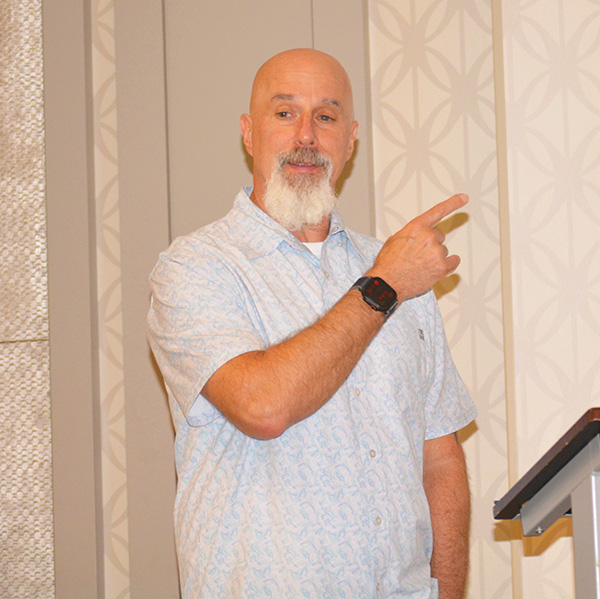 Estimating specialists Jerry McNee (Ultimate Collision Repair; Edison) and John Niechwiadowicz (QLC) teamed up once again to deliver their latest estimating workshop, “The Final Review,” to Garden State body shop owners last month. In order to reach as many collision repair professionals as possible, they held two sessions – one at the Hilton Garden Inn Springfield and the other at the Hilton Garden Inn in Hamilton.
The discussion zeroed in on various considerations shop owners can keep in mind to help maximize their gross profit.
McNee and Niechwiadowicz encouraged attendees to carefully think about numbers. Insurers are known for trying to convince shops that related steps in repairs are “the cost of doing business,” which could not be farther from the truth in most cases. Sales minus the cost-of-goods-sold equals gross profit, Niechwiadowicz explained. “The cost of goods sold should be directly related to a particular repair. If you did not have that repair, you would not have that cost.”
McNee pointed to the difference between unloaded and loaded numbers. A loaded number factors in all additional costs. For example, one does not just purchase a vehicle at sticker price without paying the sales tax. The cost with the additional tax amount is the loaded number.
“Operating expenses such as utilities, insurance and things you need to pay just to be in business are costs of doing business. When an insurer says something related to a vehicle repair is a cost of doing business, it’s baloney. They either tell you this because they are told to, or perhaps they really don’t understand it,” Niechwiadowicz relayed.
They used real ROs to demonstrate line items to help attendees see what they may be missing. A business should measure their gross profit through every step of the repair process. If something is missed, profitability gets eaten away.
“It’s important to have a job costing report for every job. If you don’t, you are likely giving stuff away. All these little things start to add up after a period of time,” stressed McNee.
He reminded all that the insurance company owes the customer; the insurance company doesn’t owe anything directly to the shop. Shops need to set the stage upfront and back everything up with a solid repair plan. “Start with a solid repair plan and work your way from there,” suggested McNee. Consistency and organization also play a big role in getting reimbursed. “If you reference panel by panel, it will be a lot harder for them to dispute.”
Documentation plays a big role and repair procedures and P-pages should be followed when estimate writing. The administrative work involved with OEM procedure research should be included in the repair plan. “Either you aren’t doing the work, or you are doing the work and giving it away. What’s worse? It’s going to come out of your pocket either way,” McNee noted.
The amount of time one can spend on blueprinting on a typical job is a direct cost that should be accounted for when determining gross profit. The amount of time it takes to review OEM repair procedures should be factored into the salary of the estimate writer. These things need to be considered when determining profitability.
Even things like waste disposal should be factored into what a shop charges to achieve gross profit.
“No one is a stranger to insurer pushback, but you have to ask for things,” McNee insisted.
“Don’t undervalue your time,” Niechwiadowicz emphasized. “You are highly experienced. You are the repair planner, the professional. You need to realize what your time is worth.”
“Be smart about things. Run your business like a business,” McNee stated.
Niechwiadowicz and McNee acknowledged the following sponsors for helping to make the workshops possible: AASP/NJ, Central Paint, Metropolitan Car-o-liner and Reliable Automotive Equipment.
Want more? Check out the June 2026 issue of New Jersey Automotive!