

CAUTION: Shielding Shops from Contaminated Cars
by Alana Quartuccio
Collision repair can be hazardous to your health!
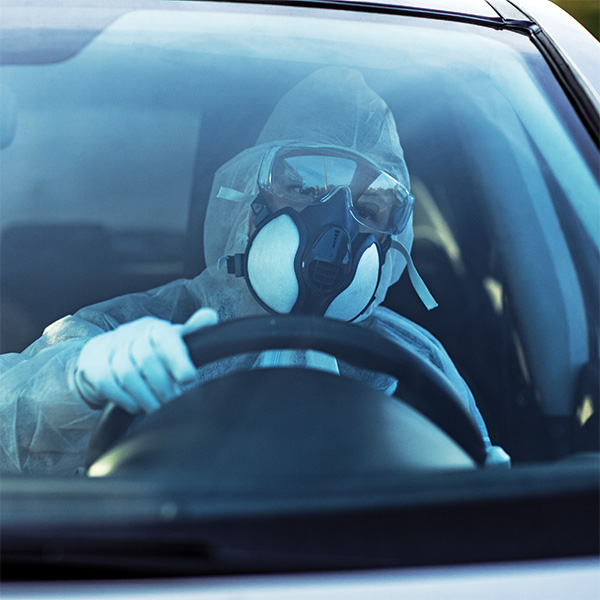 That statement can relate to a number of situations collision repair professionals contend with daily, from insurer battles causing high blood pressure to borderline exhaustion due to too many hours in the shop from a lack of staff, and more, but there is an underlying concern lurking about that most are not even cognizant of – and that lack of awareness is the alarming factor! It’s just as harmful as the actual dangerous substances, such as fentanyl, which could be present in a vehicle that could roll up to your shop at any time.
Many believe the industry needs to be aware of the dangers that could potentially wind up on the shop floor if repairers don’t take the time to understand the risks of these substances and, more importantly, have safety protocols in place before physically grabbing the keys.
“I’ve seen the dangers of fentanyl firsthand,” shares Mike Anderson (Collision Advice), who lost a loved one to a fentanyl overdose and is therefore passionate about educating the industry about its dangers. “It’s not like touching weed. I don’t think people realize how serious fentanyl really is, and it’s something this industry needs to be educated on. When you read the news, you see that fentanyl overdoses are at an all time high. There’s a lot more drug overdoses happening in cars than people realize. If you suspect any type of residue in a vehicle that comes in, call a professional to handle it.”
Earlier this year, Amber Alley (Barsotti’s Body & Fender; San Rafael, CA) dealt with a stolen recovery vehicle at her shop that had been out of the vehicle owner’s possession for about a month. Its whereabouts and use during that time period brought up some alarming questions.
“The car was towed in, and the customer had expressed concern that someone had been living in the vehicle,” Alley says. “The customer didn’t feel comfortable entering the vehicle and wanted it tested.”
Alley’s shop quarantined the vehicle on the lot to prevent anyone from touching it. Not surprisingly, the insurance company did not want to pay for the testing. After much back and forth, the customer agreed to pay for the testing, and the insurance company stated they would revisit if the test results came back positive.
“We contracted a company to come in. They took swabs, and it came back positive for fentanyl. We took it back to the insurance company, and they ultimately totalled the car,” says Alley. According to the report, “a visual inspection of the vehicle was performed, and a brown-colored powder/substance was observed on the front driver seat.”
Learning that there was “a big gob of fentanyl” right on the front seat was quite alarming to Alley, who says her team has always taken cautionary steps in the past, but this situation was much different.
“It was right there on the driver’s seat. You get in, you could have a gob of it on your pants. Maybe you don’t get sick, but what if you go home and your baby gets sick?! It’s just super scary to me.”
Ron Reichen (Precision Body and Paint; Beaverton, OR) has a thorough intake process for every total loss vehicle that comes in.
“We intake vehicles by appointment only,” he explains. “So, whether it’s a recovered theft or whatever type of loss it is, the client usually reaches out to set up an appointment and make arrangements based on whether or not the vehicle is drivable. Then we ask them to tell us about the loss, so we are better prepared for when the vehicle arrives. Did it leave the road? How many people were in it? Did you spill a mocha? If the conversion is about a theft recovery, learning about paraphernalia being present is an indication of substance abuse. We do a lot of Sprinters on our commercial side. We’ve literally had mobile meth labs come in. We identify those immediately. We quarantine the vehicles in one of our holding lots with caution tape around it, so no one can get into it, and then we reach out to an abatement company.”
Sometimes, they will put barriers up so no one can get within 10 feet of the vehicle, and they will earmark the work order that contamination is suspected.
Alley says her shop has seen some questionable items in vehicles over the years – one technician found a stun gun in a vehicle! – but it’s important to think about collision repairers as being among the first to come in contact with these vehicles which could pose certain dangers.
“Our technicians are digging under seats or trying to take the stuff out of the trunk, and they could get jabbed, cut or come in contact with bodily fluid,” she says. “If they see blood in a car, most won’t proceed. I believe blood has a certain length of time for not being contagious, but we’re not healthcare professionals, so we don’t really know what the time frame is, so it’s important to proceed with caution.”
Reichen says his shop unfortunately has dealt with biohazards as they’ve received vehicles that were involved in suicides, and in one case, a vehicle hit an elk and its remains were inside the car when the shop received it.
“Over the years, you see some things that you just don’t really want to see,” he relays. “We had a vehicle that was part of a bank robbery. It had been stolen, and a police officer shot and killed one of the criminals inside the vehicle, and we had to take possession of that vehicle. We have a biohazard suit that our people put on with rubber gloves and face masks if we’re going to deal with anything like that. And if there is any indication of drug paraphernalia, there’s an abatement company we hire.”
Alley believes safety protocols start with having a culture where ownership and management care about the safety of their employees. “You wouldn’t let your family into a car that had been outside of someone’s control and possibly had someone living in it for 30 days, so why would you let your employees enter it? I think there are certain simple things we can do to protect our team and build a culture of caring about one another.”
Alley says liability must also be considered.
“As a shop owner or manager, sometimes the cars are outside of your possession when they go to the dealership or a sublet alignment shop. So, even if you and your team have a strong understanding and protocol, you are ultimately responsible for anyone you put into contact with it, so reducing liability is important.”
Reichen agrees caution needs to be taken with all clients, not just theft recovery. There are clear signs, so being observant is key. “We open doors on cars, and you can clearly smell the stench of weed, so that’s an indication of smoking in the car. We know that when there’s an empty case of beer bottles in the back, somebody was drinking and driving. You just have to be really observant of what is going on.”
When dealing with recovered theft, Reichen advises, “Have conversation with the owner of the vehicle, and ask ‘what do you know so far?’ If it’s in an impound yard, have the police written a report? Did they catch somebody, were they arrested, and what were they arrested for? That helps us. Anything that would send us signals that there is a warning situation to proceed with caution. And when in doubt, always assume the worst. Be overly cautious and look for the little tiny indicators.”
Want more? Check out the July 2025 issue of New England Automotive Report!