
Shop Culture: Fueling the Workforce
by Chasidy Rae Sisk
The collision repair industry has spent years sounding the alarm about the ongoing technician shortage.
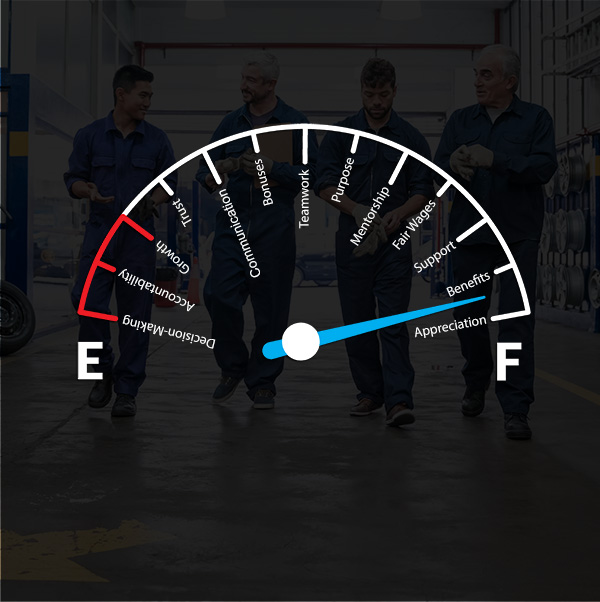 As shops across the country struggle to find skilled labor, they are investing heavily in recruitment efforts, signing bonuses and outreach to trade schools. And yet, at the same time, a different – and more troubling – trend continues to surface: technicians leaving the industry altogether.
Some are trading collision bays for warehouses, while others are opting for jobs in entirely different sectors. The question is no longer merely about how to bring people into the industry – it’s also about how to keep them once they’ve started on their collision career journey.
For a growing number of shop owners and industry leaders, the answer is clear. This isn’t a recruitment problem; it’s a retention problem. And at the center of it all is one critical, often underestimated factor – shop culture.
“Culture” is often seen as nothing more than a buzzword that people throw around to justify why a business owner needs to do things differently, but in reality, it’s so much more.
“Culture in a business is like the climate we experience when we walk outside,” explains Tony Adams (LeadersWay). “Is it hot, cold, storming, calm? Every business has a culture, and it’s a living, breathing, fragile thing.”
That “climate” isn’t just about whether employees are smiling or stressing – it directly impacts performance, productivity and profitability. It influences how teams communicate, how problems get solved and how customers are treated.
Mike Anderson of Collision Advice takes it a step further: “Culture is a shop’s biggest competitive advantage.” He offers a simple litmus test: “If your shop was a sports team, would your employees want to wear your jersey?”
For many shops, the honest answer is no.
Across industries, employee engagement is already a challenge. Recent Gallup surveys show that roughly 70 percent of the workforce is disengaged, with a significant portion actively disengaged – meaning they’ve mentally checked out but still show up to work. That disengagement has a high cost. It shows up in missed deadlines, lower quality work, poor communication and higher turnover.
“This is causing most of your problems,” Adams believes. “I fear those disengagement numbers are much worse in the collision industry from my experience talking to people on the floor in different shops. While studies indicate businesses with more engaged employees enjoy higher profitability, the converse is also true. In toxic organizations – where employees are treated poorly by management – disengagement leads to reduced productivity, decreased employee satisfaction and higher turnover, inhibiting profits. When it comes to the war for talent, do you want to be known as the shop with a revolving door…or the one where people are lined up, wanting to come work for you?”
So, what makes an employee want to work with you – and stick around for years?
“Shop culture isn’t something you talk about – it’s something your people feel every single day,” stresses Josh Fuller (Fuller Collision Group). “Our culture starts with engagement and ownership. We involve our team in decision-making wherever possible, especially when it impacts their day-to-day work. When people feel heard, execution improves and so does accountability. In many ways, we’ve intentionally moved away from the traditional top-down approach and instead focus on trust, communication and empowering our team to lead. That shift has made a meaningful difference in both morale and performance.
“Some of our most meaningful changes have come from listening to our team,” Fuller adds. “Programs like our stakeholder referral initiative, milestone-based recognition system and structured onboarding were all built to support retention, growth and a sense of belonging. Even smaller initiatives, like providing a clothing and safety allowance, reinforce that we care about our team’s well-being and professionalism.”
“Culture is built in the gray areas – how we handle repair planning, while making quality decisions and delivering great customer communication,” Matthew Ciaschini (Full Tilt Auto Body & Collision; West Hatfield) weighs in. “Set the standard, enforce it daily, and don’t compromise it for volume or insurer pressure. This trickles down to the employee level. We run tight SOPs, hold short daily production/release meetings and make expectations clear: OEM-correct repairs, accountability and respect across departments. If someone doesn’t align, it gets addressed quickly. Every employee has to have the buy and sell mentality. Would you buy what the previous tech is selling you? If not, send it back. It’s quality control as you go. We know perfect is impossible, but we do the best we can every day.”
Ciaschini also believes it’s important to pay a fair hourly wage: “We try our best to pay skilled techs what they deserve. This industry is tough, and we know we are all underpaid, but if you want to do quality work, flat-rate is not an option. This type of work inherently breeds speed over quality. If a tech is highly skilled and efficient, they can get paid just as well – if not better – hourly.”
While competitive compensation and benefits matter, they’re rarely the deciding factor in whether someone stays long-term. “People don’t quit jobs; they quit bosses” is a commonly echoed phrase that reflects a deeper truth: employees stay where they feel valued. But that sense of value isn’t always inspired solely by their paycheck.
“Everyone feels appreciated differently,” Anderson explains. “We often try to reward people the way we want to be rewarded, but that’s not necessarily what matters to them.”
For some, it’s financial incentives like retention bonuses. For others, it might be an extra day off, a flexible schedule or the ability to attend a child’s school event without stress.
Some shops have seen retention improvements by implementing four-day workweeks, additional PTO and enhanced benefits. In many cases, these changes not only improve morale, but also boost productivity. Some operations have even reported measurable increases in output after shifting schedules. “Giving time back to your employees is a great way to enhance shop culture,” Adams believes.
While Ciaschini personally struggles with maintaining a work/life balance, he does not “want my techs to have that issue. We are evaluating the idea of a four-day workweek as well as providing generous paid time off for all employees.”
One of the biggest barriers to improving culture is fear: fear that investing in employees will simply make them more marketable to competitors. But leaders across the industry argue the opposite: that failing to invest in your team often drives people away.
Training (both technical and personal) is a cornerstone of strong shop culture. From OEM certifications to leadership development, ongoing education signals to employees that they have a future within the organization.
Fuller Collision Group recognizes this and puts an emphasis on “investing heavily in training, from technical certifications to leadership and personal development, often supported through workforce development programs. In an industry that’s evolving as quickly as collision repair and ADAS, continuous learning isn’t optional; it’s critical,” Fuller emphasizes. “We view training as more than just skill-building; it’s about confidence, growth and long-term career development. When employees feel invested in, they tend to invest back into the company, the customer experience and the team around them.”
Ciaschini agrees. “We provide most everything our techs need to be successful – training, equipment, tools and information access. If a technician needs a computer workstation in their bay for easier access to procedures, we provide it.” He also believes it’s important to establish clarity around how employees can advance on their career path. “We provide what it takes to move up and earn more to every employee when they start and at every review.”
That clarity starts from the moment an employee begins their tenure at Full Tilt.
Having clear roles and SOPs “removes chaos and finger-pointing,” according to Ciaschini. “This empowers employees instead of pigeon-holing them. If they feel like they have a clear outline of what they are responsible for, it puts their goals in perspective.” The shop has also recently invested in an automated production board to create a seamless workflow that ensures technicians are always aware of what’s coming into their bay next.
Fuller suggests that developing a transparent chain of command is also beneficial in creating a positive work culture. “We’ve worked to create clarity within the organization by making sure everyone knows where to go for support, whether that’s their manager for daily responsibilities or HR for more formal needs. That structure helps reduce friction and builds confidence across the team.”
Although offering competitive compensation and benefits (health insurance, a 401(k), retention bonuses and even team lunches) can improve how employees view their jobs, some of the most memorable culture-building efforts have little to do with money and everything to do with impact. Culture isn’t built through grand gestures alone; it’s primarily shaped by everyday interactions.
“Are we treating people like people?” Adams asks. “Simple things like ‘thank you’ go a long way. We spend a lot of time catching people doing things wrong and correcting behaviors, but we need to spend more time recognizing people when they do something right. Culture isn’t something we work on once a month; we have to be aware of the culture we’re building in everything we do and say in the shop because that directly affects how people feel about the business.”
Identifying memorable ways to reward a team can make a huge difference, Anderson suggests, referring to a shop owner who offers employees a “paid-paid vacation” – in addition to the paid time off, the shop gives team members actual funds to take that vacation. “People don’t always remember what they spent their money on, but they remember experiences.”
That might seem out of reach in today’s economic environment, but even simple actions – saying thank you, recognizing a job well done or checking in on someone who seems “off” – can have a profound impact. Adams references the idea of an “emotional bank account,” where positive interactions are deposits and negative ones are withdrawals. Too many withdrawals without enough deposits lead to disengagement. “We spend a lot of time correcting mistakes,” he observes. “But how often are we catching people doing something right?”
At its core, shop culture influences every aspect of a business, from employee satisfaction to customer experience. Adams often references a quote from restaurateur Danny Meyer: “The customer experience will never rise higher than the level of the employee experience.”
In other words, if employees are unhappy, customers will feel it. “If you have CSI (customer satisfaction index) issues, you have ESI (employee satisfaction index) issues,” Adams says. “The path to profit is pretty simple: ESI + CSI = Profit. And it must come in that order, starting with your employees.”
Culture isn’t a program. It’s not a monthly pizza party or a one-time initiative. It’s the sum of everything a business does – every interaction, every decision, every moment – and it determines whether employees show up just to work or whether they show up invested, engaged and committed. In an industry facing ongoing workforce challenges, that distinction matters more than ever because no matter how many technicians enter the field, it will never be enough if they don’t want to stay.
“Ultimately, we believe culture isn’t built through one program or initiative – it’s built through consistency,” Fuller insists. “It’s how you communicate, how you respond to challenges and how you show up for your people every day. As we’ve grown from a single location to multiple operations, maintaining that culture has become even more important. Our focus continues to be on building an environment where people feel valued, supported and part of something bigger than themselves.”
“We don’t necessarily believe in a lot of rah-rah BS at our shop, but we do believe in the right DNA for us,” Ciaschini notes. “We need people who problem solve and work as a team. The outcome dictates the compensation. If we always do the best we can everyday, our culture stays high quality. If techs see someone not holding their weight, they make sure to let that other tech know, and if it doesn’t get fixed, they let management know. We need buy-in on every level – from CSR to detailer. If employees don’t believe in what we are trying to accomplish or they take shortcuts, they don’t survive in our environment.”
At the end of the day, culture is the fuel. It’s what drives performance, powers engagement and keeps the workforce moving forward. Without it, even the most well-equipped shop will struggle to gain traction. With it, teams don’t just function; they thrive. The shops that will lead the future of collision repair won’t simply be the ones with the latest equipment or the highest DRP volume. They’ll be the ones that understand what truly fuels their workforce – creating environments where people feel valued, supported and proud to belong.
Because when culture is strong, the workforce doesn’t just show up. It stays.
Want more? Check out the June 2026 issue of New England Automotive Report!