
Are You Violating 93A with Every Repair? Compliance Is Not Occasional – It’s Every Day
by Sean Preston, Managing Attorney, Coverall Law
At my former law firm, when a repair shop came in with a demand letter – whether from a customer, an attorney or an insurer – we always asked ourselves the same question first: Did the shop follow all the regulations? And practically every time, the answer was No. That told us everything we needed to know. Our response was always the same: Pull out your checkbook. We need to make this go away.
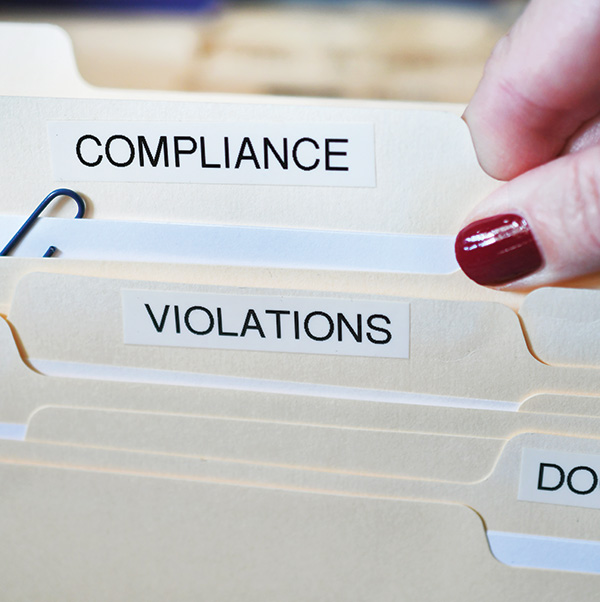 This wasn’t about fraud or bad repairs – it was about compliance. Specifically, whether the shop had followed one of the most basic obligations in Massachusetts consumer protection law – delivering a copy of any signed document to the customer – and most shops hadn’t. And because they hadn’t, they had already committed a technical violation of 940 CMR 5.05(11), which meant they had also violated Chapter 93A – the Massachusetts law that allows consumers to sue businesses for “unfair or deceptive acts or practices.”
Many shop owners think compliance is something that comes into play only when a lawsuit hits their desk – something to “get in order” when it’s already too late. But the truth is, compliance happens every day, with every customer. It happens – or fails to happen – in the routine paperwork you send (or don’t send), the signatures you collect and what you do with them afterward.
Coverall Law recently reviewed a dozen authorization forms being used by shops in Tennessee. Not one of them complied with that state’s regulatory requirements. Not one. And Tennessee is far from the only example.
What makes this even more dangerous is that many violations are so basic they go completely unnoticed – until they’re raised as leverage in a claim. The requirement to deliver signed documents is a perfect example. It’s easy to comply with but rarely enforced – which makes it ripe for use as a “gotcha” when tensions rise. That’s why Coverall Law doesn’t wait for problems to occur. We work with our member shops to build systems that stand up to scrutiny, before they’re ever challenged.
One Easy Obligation: What 940 CMR 5.05(11) Actually Requires
Here’s the full text of 940 CMR 5.05(11), a regulation issued by the Massachusetts Attorney General:
“It is an unfair or deceptive act or practice for a repair shop to fail or refuse to provide to a customer a copy of any document signed by the customer either at the time the document is signed or at the completion of the repair work.”
That’s it. One sentence. But one sentence can do a lot of damage if it’s ignored.
Let’s break it down.
What does it mean to “fail or refuse”? The regulation doesn’t clarify whether a violation requires an affirmative refusal – or whether a simple oversight is enough. In the world of M.G.L. c. 93A, courts don’t typically give businesses the benefit of the doubt. If a customer asks for a copy and doesn’t get one, that could be a “refusal.” If a shop forgets to give one and never corrects it, that could be a “failure.” Either way, the language of the regulation is broad – and that ambiguity works against the shop.
Then there’s the timing: “at the time the document is signed or at the completion of the repair work.” But what if the customer never receives a copy at either time – and gets one later, only when a dispute arises? Has the shop already violated the regulation? Likely yes. The requirement isn’t “eventually.” It’s at the time of signing or at completion – not whenever it’s convenient.
This is what makes 93A so risky. The statute does not require proof of intent. A shop can be found liable for committing a deceptive act…even if it didn’t mean to deceive anyone. In fact, courts often treat violations of regulations like this one as intentional torts – meaning the shop’s motive doesn’t matter. That’s why Coverall Law teaches a simple rule: “People in glass houses shouldn’t throw stones.” You can’t enforce your rights if your own compliance house isn’t in order.
So, which documents fall under this rule? The ones that customers sign, and for most shops that means Authorizations and Directions to Pay. These are the forms customers sign – often on the day the vehicle enters the shop. That means, from the very first interaction, many shops are already out of compliance. And to be clear, these aren’t the only documents that may fall under 5.05(11) – any signed document can trigger this rule. That’s why Coverall Law is always happy to review your full document stack to ensure that your process is legally defensible from the start.
The 93A Landmine: How Small Things Become a Lawsuit
Under Massachusetts law, a violation of 940 CMR 5.05(11) is more than just a regulatory slip – it is a per se violation of M.G.L. c. 93A. That legal term, per se, means that a violation of the regulation is automatically considered an unfair or deceptive act. There is no need to prove intent, actual harm or deceptive motives. The violation itself is enough to create liability.
This is what makes regulatory noncompliance so dangerous for repair shops. A business owner may have acted in good faith. The repairs may have been done flawlessly. The customer may have even paid in full and expressed no complaints about the work. But if the shop didn’t provide a copy of a signed document at the time of signing or at the completion of repairs – even unintentionally – the customer could allege a 93A violation based solely on that oversight.
And once a 93A claim is triggered, the stakes escalate. Chapter 93A allows for:
• mandatory attorney’s fees,
• actual damages, and in some cases,
• treble damages.
If the conduct is deemed willful or knowing, a minor error can suddenly become the basis for a lawsuit worth thousands – or tens of thousands – of dollars. And because 93A claims often open the door to broader discovery, what begins with a missing signature page can quickly lead to scrutiny of the shop’s entire process.
This is exactly why these claims are attractive to attorneys, insurers and regulators alike. They’re easy to allege, difficult to disprove and almost always reveal additional compliance weaknesses once the surface is scratched. As a result, many shops find themselves negotiating from a position of weakness, not because they were bad actors, but because they were unaware of – or indifferent to – the everyday regulatory standards they’re expected to meet.
940 CMR 5.05(11) is just one of those standards. It’s a simple requirement, but it functions as a gateway to much larger problems. One sentence in a regulation becomes one sentence in a complaint – and suddenly, the shop is on the defensive.
From Reactive to Ready: Why Compliance Starts Before the Claim
The collision repair industry has spent decades reacting to legal problems instead of preventing them. For most shops, legal strategy begins with a problem – a threat letter, a denied supplement, a refund demand or worse, a lawsuit. By the time attorneys are involved, the damage is already done, and the shop is negotiating from behind. It’s not because shop owners don’t care. It’s because the industry, as a whole, has been conditioned to wait for issues instead of anticipating them.
Coverall Law exists to change that.
Our philosophy is simple: repair shops should be just as proactive and process-driven in their legal compliance as they are in frame measuring, refinishing or ADAS calibrations. We don’t just respond to disputes – we work upstream, helping shops build systems that are legally defensible from the start.
One area where this shift is most obvious is in documentation. Across the country, Coverall Law has reviewed hundreds of customer-facing forms – authorizations, directions to pay, repair contracts, warranty disclaimers – and not a single one included what would be considered standard in any other regulated industry: a clause acknowledging receipt of the signed document. That single clause, common in Fortune 500 contracts and government forms, is virtually nonexistent in the repair industry – even though it offers clear legal protection.
This is why Forever Forms were built. It’s not just a form – it’s a tool of legal engineering, designed to close the gaps that have plagued shops for years. It combines nine critical documents into a single, compliant package, including an express customer acknowledgment of receipt. More importantly, it’s built to work with the technology shops already use – we don’t ask shops to reinvent their workflow; we help them strengthen it.
Shops have always been forced to defend themselves with broken systems. Coverall Law is giving them something better: a foundation that holds up under pressure. That shift – from reactive to ready – is what separates the shops that survive from the ones that lead.
The Best Time to Fix It Is Before It Fails
There’s a reason so many consumer complaints catch shop owners off guard. The problem isn’t always the repair, the communication or the price – it’s the paperwork. More specifically, it’s the compliance assumptions buried in everyday processes. Shops assume they’re covered because the work got done or because the customer didn’t complain. But regulators and courts don’t care about assumptions. They care about whether the shop followed the rules – and those rules are written down, in black and white, in the Code of Massachusetts Regulations.
940 CMR 5.05(11) is not obscure. It’s one of many small, clear and easy-to-violate rules that repair shops overlook every day. The longer shops ignore these details, the more vulnerable they become – not just to consumer claims, but to insurers, auditors and regulators who know where to look. When a shop is noncompliant with a simple rule like this, it often signals to outside parties that there are other problems waiting to be uncovered.
Compliance isn’t about being perfect. It’s about being proactively defensible. The shops that invest in their documentation, their systems and their legal strategy before something goes wrong are the ones best positioned to fight back – or avoid conflict altogether. The shop that can say, “Yes, the customer received a signed copy, and we can prove it” is the shop that never has to write a check just to make a problem go away.
Coverall Law is helping to build that kind of shop – one that understands that compliance isn’t an emergency response plan. It’s a business practice.
Want more? Check out the February 2026 issue of New England Automotive Report!