

A Total Win: CIC Captures Concerns and Complaints
by Alana Quartuccio
A full-day of discussions centered on loss turned out to be a huge win for the collision repair industry.
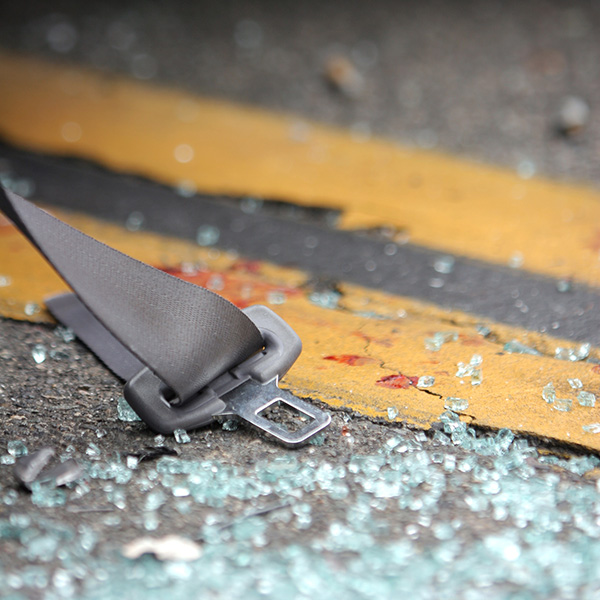 The July Collision Industry Conference (CIC) held in Philadelphia was the first of its kind. Breaking out of the mold of having each committee present on various hot button issues, all committees themed their discussions on the boiling concerns centered around the growing trend of total loss.
CIC Chairman Dan Risley shared data to support the concerns that “over the last six to nine months in particular, I”ve heard a lot about the industry seeing a decrease in claim volume or seeing a drop in accident frequency. When this happens, everyone looks to find out why and this could be one of the reasons shops are seeing a drop in repairables.”
During COVID, there was a decrease in total loss claims, but what’s happening now is the direct opposite. Risley posed the question, “What is the new norm? We’re looking at Q1 2025, and almost 24 percent of non-comp losses resulted in a total loss. It’s pretty timely for us to have this conversation as it’s impacting the large majority of people in this room, whether you’re a repairer, insurer or car manufacturer. Everybody’s impacted by this.”
Risley outlined some of the trends the industry needs to keep an eye on, particularly related to the fact that “we’ve had almost a 50 percent increase in total loss on drivable vehicles in the last three years.” He also pointed out that the climb started in 2021 and 2022 growing from six and seven percent to almost 10 percent on newer model vehicles; total loss is up to 32 percent on vehicles that are seven years or older. This last figure is significant because “that seven-year-old vehicle right now is a 2018. How many ADAS features are on vehicles older than 2018? Not that many, but as that [trend] continues to play out and vehicles with more ADAS features start to slide over into the seven years and older category, what impact will that have on total loss?” With the average adjusted value of total losses on vehicles seven years and older at about $9,000, Risley asked, “What’s going to happen to all these vehicles that have ADAS features on them seven years from now? Those cameras and sensors are not inexpensive. That could result in more total losses. It’s something for us to keep an eye on.”
Liz Stein (Certified Collision Group) led the OEM Industry Relations committee in a thorough panel discussion that examined how total loss information is affecting consumer brand loyalty and what OEMs are doing to address this.
Consumers are switching from “buying just one type of vehicle to buying multiple brands of vehicles,” Stein relayed. Consumers are taking safety features into consideration as well as varying their options between gasoline and electric vehicles. These factors have led OEMs to have real conversations about how to keep consumers driving their brands. “We certainly don’t want them switching brands for any reason,” relayed Paul Samuelson (Nissan North America). “Consumers may be unsatisfied with different things about the collision experience, so we really want to make sure we can keep them in our ecosystem.”
Stein pointed out some consumers don’t want to deal with insurance especially after a total loss experience, seen as a “total disruption” to a consumer and causing some to even opt to rent Zipcars, instead of purchasing a new vehicle.
Total loss increases appear to be happening across the board with gasoline, hybrid and electric vehicles. Samuelson reported an interesting factor that hybrids appear to total more quickly than gasoline or electronic vehicles.
Data shows it’s an industry wide problem. If a third of an OEM’s customers defect after a total loss, and total losses continue to increase, “that is bad news for an OE. We want to make sure that we somehow mitigate that as it is a complex situation for all of us in the industry,” offered Samuelson.
Even paint manufacturers are affected by total loss increases since they are likely to sell less product “because you can’t paint a vehicle that’s not being repaired,” Stein pointed out. “This is an industry-wide issue that I think all of us are kind of scratching our heads, working to address. We all own this challenge, and we have to work together to solve it.”
She offered possible solutions body shops can consider to help make things easier on consumers. “Consumers feel they are not heard or cared for and that we treat them with a ‘do you want fries with that order?’ [mentality]. We need to listen and realize a total loss is a new thing to happen to them. This accident may be the first accident they ever had. Can you help them figure out a solution that’s better for them? Think about how you can make it a better experience.”
Another triumph on the CIC stage was the debut of a podcast-styled segment called “The Industry Experiment,” featuring Aaron Schulenburg (Society of Collision Repair Specialists) and Brunno Moretti (Ascential Technologies) who shone a light on some new considerations concerning ADAS calibrations.
The back and forth conversation between the two was a highlight of the day as Moretti shared the findings of an ADAS study that looked at how a 2024 vehicle performed following a good calibration, a poor calibration and zero calibration.
There’s all this industry talk about the severe consequences of not calibrating correctly, but there’s no data to back it up, Moretti spoke of the action behind the study. The baseline vehicle had 13,000 miles on it “so it had some love. That is the average amount of miles driven per year,” he explained. Some modifications were done to the vehicle with “no calibration,” so it no longer knew what “home” was, while “poor calibrations” were done with uneven flooring, inconsistent lighting, improper radars, etc.
Not surprisingly, the “good calibration” vehicle outperformed the baseline which shows “there was enough wear and tear at 13,000 miles from pot holes or other factors to make the ADAS in the vehicle drift in its performance.” This opens the door to the idea of ADAS maintenance. Several considerations were weighed, including whether the responsibility to maintain would fall on the consumer.
Schulenburg stated, “As someone who fields a lot of concerns from the repair market, I worry that the idea of ADAS safety as a maintenance item is going to be on the consumer to maintain. My question to you is, from your research, even if you have to maintain ADAS as a consumer, an event is still going to change it and readdress it.”
“100 percent,” Moretti concurred. “Things get knocked off, sensors don’t know where home is. It needs to be corrected.”
Both agreed that more education is needed in the ever-evolving world of ADAS.
ADAS maintenance could be a revenue stream for the body shop. “Doing the right thing could make shops more money,” suggested Moretti.
Led by Jill Tuggle (Auto Body Association of Texas), the Governmental Committee explored total loss and salvage vehicle laws at the state level. There’s no universal definition for total loss or salvage, Tuggle stated, adding “every state makes its own definitions or uses different terms, and each state has different rules for salvage vehicles.” Iowa has a state total loss threshold of 70 percent, although it’s still in the insurer’s hands to determine if a vehicle is a total loss even if under 70 percent. Rhode Island is the only state that gives the customer the right to determine if they want their vehicle repaired below an 80 percent threshold. In
Pennsylvania, every total loss vehicle gets a salvage title.
Via a panel including Stephen Madrak (Pennsylvania Department of Transportation Motor Vehicles), local shop owner Max Keller (Conestoga Collision and Auto Body Repair; Berwyn, PA) and David Willett (SPARK Underwriters), discussion focused on consumer safety and the qualifications for determining if a vehicle is eligible for the reconstructive process.
“We have an enhanced safety program in Pennsylvania that ensures that the post-repair vehicle is on-the-road worthy and branded properly so the consumer is aware of the history of the vehicle,” Madrak explained.
Most people aren’t familiar with the laws in their state, and therefore, states could do a better job at educating people on those laws, Tuggle noted. As a shop owner in Pennsylvania, Keller reported seeing about 50/50 total loss versus repairable. As for handling the customer when their car is deemed a total loss, “These days, the insurance companies are beating us to that conversation and totalling the car before we are even notified,” he claimed. “We will try to let the customer know there may be a chance and we will try to prepare them for that conversation and suggestions on how to work out the value.”
Willett gave some food for thought suggesting OEs start to play a bigger role in the areas of total losses. “OEs come up with ways to repair the car, should they be coming up with ways on how to total a car. It seems to me that it should be more reliant upon the manufacturers’ engineers and certified repairers to make that [total loss] determination. Some are saying that there are vehicles that could be repaired. It seems like we’re missing an opportunity to use the expertise and knowledge of the OEs. I believe that for the betterment of our industry, that’s something that should be explored.”
Several audience members polled Madrak looking for more details on what type of inspection goes into making sure these vehicles are safe to re-enter the roadways.
“In Massachusetts, when a [salvage] vehicle has been branded repairable and someone goes to repair it, their main concern is making sure the parts are legally sourced, for lack of a better word,” stated Lucky Papageorg, executive director of the Alliance of Automotive Service Providers of Massachusetts. “Not once have I seen them get under the vehicle to check if it’s structurally sound. I think that is a key part in what is happening with salvage vehicles. Are the proper repairs being done, not just structurally, but also with ADAS?”
Madrak explained Pennsylvania conducts a mechanical inspection to determine if the vehicle is “road worthy and structurally sound.”
On behalf of the Data Access, Privacy and Security Commission, Brian Burbridge (Caliber Collision) drew light to the unanswered questions that lie in what happens to a consumer’s personal identifiable information (PII) when a vehicle is totaled.
“How do we protect a customer’s personal info? The customer is not thinking about this in the event of a total loss. Trust me. They are not.”
It’s not something the industry is thinking about either, Burbridge stressed. “Who is liable for PII if it’s not removed? I don’t think the industry has that information. We have to resolve that.”
Led by Danny Gredinberg (Database Enhancement Gateway) and Kye Yeung (European Motor Car Works; CA), the Repair Process and Procedures and Estimating and Repair Planning committees teamed up for “Total Loss…Total Process” with panelists Andrew Batenhorst (Pacific Collision Center; CA), Christina Sepulveda (SPARK Underwriters), Matt Pitta (Lucid Motors) and Scott Weber (Copart) who covered all bases – from determining total loss to admin duties and storage to safety concerns and salvage auction pick up.
For the body shop, dealing with a total loss is “more than taking a quick photo and parking it out back,” clarified Gredinberg.
“We’re administrative processors these days,” he said, listing all the things a shop has to deal with involving a total loss, including communicating with the customer, the insurer, transporting the vehicle from the storage yard or accident scene and then some. There’s also the work that goes into understanding where the vehicle has been if there are unknown details which could open the potential for exposure to hazardous materials if it were involved in a crime scene or drug abatement situation.
OEM research and proper repair planning still needs to be done, insists Gredinberg, who has known some to just write whatever with “a couple clicks, and that’s it.”
“Once it’s deemed a total loss, and a vehicle is at your facility longer than it needs to be, make a call; be proactive with it,” advised Sepulveda regarding liability concerns.
Yeung pointed out a concerning void in the salvage process. “Are we responsible for that car from cradle to grave because we touched it last? What happens if you have an electric vehicle with a compromised battery, and we know it is because it’s a total loss. Some OEs have instructions on how to power down the battery to a certain percentage or even power down completely. When that car gets picked up by the salvage company, there’s no form that they sign or that we give them to say we’re done with that vehicle. How do we notify them this vehicle could still potentially have a thermal reaction because of battery damage? It’s cause for concern.”
The CIC audience learned about the process the global online vehicle auction company goes through to pick up vehicles as Weber outlined Copart’s process for picking up vehicles and deeming them roadworthy. “We do rely on the shop and will question the shop,” says Weber about its condition and if any dangers are present.
Discussion focused on how very little is known about the safety of transporting EVs. Pitt noted, “There’s no federally mandated state of charge for transporting an electric car. At Lucid, we just default to California’s rules, which is 30 percent or lower. There’s no regulation on totaled cars. Our organization has discussed whether 30 percent is low enough, should it be below five percent…or drained completely and have the pack removed from the vehicle.” Lucid plans to release documentation and special tooling to help shops learn how to deal best with total loss vehicles being prepared for the salvage yard.
Improper handling of electric vehicles can lead to negative consequences as well.
“We had a vehicle come to us that didn’t appear to be a total loss at the time based on the exterior damage that we found,” shared Batenhorst whose team discovered a damaged battery pack because the car had been put on a forklift which is “really dangerous on an EV as the forks pass directly underneath the battery pack. After recommendations we got from Lucid, that battery pack now needed to be replaced, and the vehicle would end up becoming a total loss.”
Pitt addressed security concerns involving the removal of consumers’ PII. He confirmed there are steps to remove the information and noted that Lucid “is working on a visual document along with a checklist, so if a car is a total loss, there will be a pass/fail.”
In response to Weber confirming that Copart sells vehicles to “all parts of the globe,” Yeung questioned, “Are these international buyers driving up the salvage sales and causing more vehicles to be totaled?” to which Weber responded, “It depends because it drives up the competition. Having a large consumer base has been beneficial to our customers by driving up that salvage.”
Excitement is growing for the next CIC to be held November 4 in conjunction with SEMA 2025 in Las Vegas. For more information, please visit ciclink.com.
Want more? Check out the September 2025 issue of Hammer & Dolly!