
WMABA Helps Secure Rivian Parts Donation for Edison Academy’s Collision Program
by Alana Quartuccio
It can surely take many hands to help make this industry better – especially for the next generation.
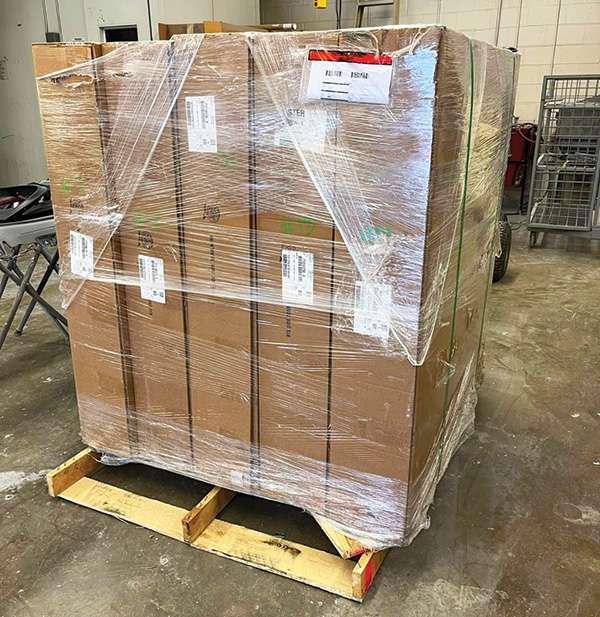 Collision repair educational programs with limited funds can certainly use all the help they can get, so when WMABA leaders recently learned of an opportunity to get materials in the hands of local collision repair students, they jumped in to assist.
Thanks to the generosity of automotive manufacturer Rivian, which had six pallets of unused body parts they wanted to see be put to good use, the students in the collision repair program at Edison Academy (Alexandria, VA) have plenty to work with and learn from!
“Rivian had an overstock of certain body parts that were slated for recycling, and I wanted to find a better use for them,” states Kelly Logan, director of collision repair programs at Rivian. “I know that technical high schools and colleges often face challenges in acquiring late-model parts, as the cost of parts, paint and consumables can quickly add up for their programs. With that in mind, I reached out to WMABA and the Society of Collision Repair Specialists to see if they knew of any interested schools. We were delighted to support Edison Academy with parts that their students can utilize in their autobody courses. It’s a fantastic way to give back to the collision industry, and we hope that by using these parts, students will be further motivated to pursue a career in collision repair.”
Kris Burton, WMABA president and SCRS vice chairman, heard the call and helped make it happen for Edison Academy’s program.
Charles Cornwell, the program’s instructor, is extremely grateful for the contribution as the school relies heavily on donations for hands-on materials as funding can only go so far.
“The donation was huge!” Cornwell shares. “I didn’t realize it was going to be that big.” He says the students are excited because they can use the panels solely to practice their skills without having the aspect of a customer involved if they were to work on someone’s vehicle.
“With these panels, we can make dents and repair them in many different ways, such as the hammer and dolly technique or the stud pulling technique. We have the new plastic pull system to practice with as well. My level two students will probably use the panels to practice painting. We also have a waterborne paint system that was donated to us that we use. This panel donation is big for our program.
“Kris Burton and I have become really good friends, and he helped tremendously,” he continues. “He has the heart the size of Virginia and does what he can; he always wants to help out. He is the one who put in for this and got it all worked out. He has been the man.”
Edison Academy’s collision repair program has been around for decades; in fact, Cornwell is a product of the program he teaches today.
Cornwell is the sole auto body instructor of the program, though he receives some support from resource teachers who assist with some of the students. The program is made up of different levels. The program at level one can have as many as 100 students who meet every other day between the first four periods of the school day. Students who advance to the next level usually show a great interest in what they’ve learned, which includes welding, body work, paint work and estimating. “They get quite more in-depth when they come back for level two,” he says of the continuation which he usually limits to roughly 15-18 students who have shown the most interest.
He enjoys watching students grow from the program.
“I have brought back the students who seem to gain a lot from being in my class. It seems to help some of the students socially; they seem to get more in this program than from being in a regular classroom. I enjoy seeing those students who need this the most in the program. I have about 10 students out in the field right now working as apprentices and helpers. This year will be my seventh year teaching.”
Cornwell stressed how important it is to receive donations like this so students truly have the opportunity to explore and expand their skills which can help launch their career path. He’s also thankful to companies like PPG which supplies the school with paints and materials. “The county donates cars to us to practice on, and that helps quite a bit.”
Overall, he’d like to see some more involvement from area body shops. “I get shops all the time in need of students, but I don’t get shops wanting to help the program or donate to it. I feel like I could do a lot more if I wasn’t so concerned about material.”
Want more? Check out the August 2025 issue of Hammer & Dolly!