
Industry Advice: How Can Shops Better Educate Consumers and Elevate Their Experience?
with Mike Anderson
This month, we “Ask Mike” to share his thoughts on elevating the customer experience through education. We at Hammer & Dolly hope you find the following exchange useful, and we encourage you to reach out to us if you have a question for Mike on this or any industry-related matter that he can answer in a future issue.
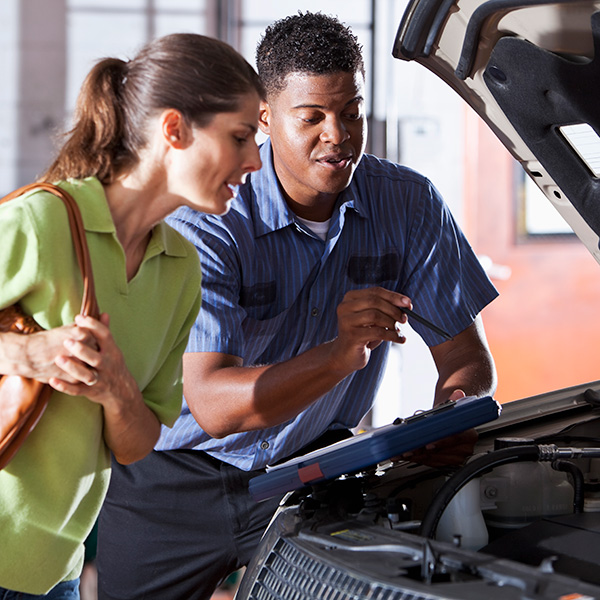 Hammer & Dolly: A friend of mine recently filed an insurance claim after he struck an animal with his car. He decided to take the vehicle to a facility recommended by his insurer. The place was spotless, the staff was friendly and professional and the drop-off took about 10 minutes. While he was driving home in his rental, he had mixed feelings about the repairs to come. While he liked the ease with which he dropped off his vehicle and the shop’s assurances that they would take care of everything, he didn’t know anything about the repair itself, the kind of parts that would be used and the extent of the work that would be performed. He told me that although the drop-off process was convenient, it also felt rushed. How could his customer experience have been elevated, and how could the shop have better educated him at the beginning – and throughout the entire process, for that matter?
Mike Anderson: Think of a triangle as representing an amount of time. The top point represents the least time, and the time increases as the triangle widens. The top point is the time someone at the shop interacts with the customer at the beginning of the process, which is the shortest amount. As the vehicle goes through repairs and we involve the customer in discussions with the insurer, we end up spending more and more time. In my opinion, we need to flip that triangle upside down and spend more time with the customer on the front end.
When I had my shops, which were non-DRP, we always had three types of appointments. We had an estimate appointment and a drop-off appointment, but we also had something called a damage review appointment, or DRA. That was where they brought in their insurance estimate, and we assessed it to figure out what the repair was and what it would need for parts, or what have you. When we did our DRA appointments, we always let the customer know to expect them to take about an hour. We’d also set proper expectations with that customer, such as asking them to make sure their trunk was empty or that the vehicle had the proper amount of gas. We set their expectations of how the process was going to work, but we also explained things that may or may not work with their insurance company.
That said, we were careful not to badmouth the insurance company; we were careful with our word track. We wouldn’t say, ‘Your insurance company won’t pay for us to measure your steering column for a safety inspection.’ Instead, maybe we’d pose it as, ‘There’s no way we can verify that your systems are working properly unless we do X, Y, Z.’ We used a different word track with the customer because we didn’t want to scare them off.
We also practiced something called ‘shoulder-to-shoulder’ selling when we wrote estimates. A lot of customers still have the mentality that a bumper cover repair or replacement is going to be $300 or $400 when it could be $4,000 or more. Instead of sending them an estimate after they leave, we’d write the estimate with them sitting right there with us. We’d have dual monitors and show them the parts and procedures we were estimating. We’d educate consumers as we were building those estimates for them. That process helped the customer avoid sticker shock and become better educated when dealing with their insurer. Along the way, we avoided industry terms, knowing they wouldn’t understand what they meant. We always aimed to simplify things so they’d leave confident they were being taken care of and aware of how we’d address their repairs.
H&D: Of course, education goes far beyond the actual repair. What are your thoughts on how shops can better engage and inform consumers once their vehicles have left the premises?
MA: Customers expect you to follow up after the fact. In today’s world, where shops are trying to get CSI surveys and Google reviews, contacting customers after a repair to request those things if they haven’t done them is another great opportunity to connect with and educate them. You could also ask them something specific about the repair, like, ‘How is everything with your driver’s side door? Is it working properly?’ Post-repair follow-ups help the customer have greater peace of mind and provide them with an opportunity to address additional questions they may have for you. It also helps when a customer is happy enough with you to recommend the shop to a family member or friend. An educated consumer could be the best marketer you’ll ever have for your business.
The bottom line is that shops need to spend more time with their customers. They’re spending $4,000, $5,000 or $8,000 with you. Don’t just take their money and let them go.
Want more? Check out the July 2026 issue of Hammer & Dolly!