
WMABA Actively Advocates for Safe Repair Legislation
by Alana Quartuccio
WMABA will stop at nothing when it comes to protecting the integrity of safe and proper repairs.
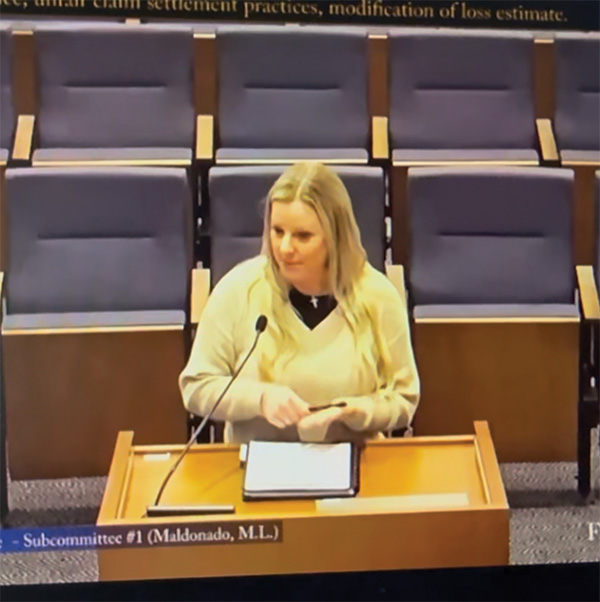 The association has been vigilantly supporting proposed unfair claim practices legislation in Virginia that could bring positive change in consumer protection by calling for insurance transparency. At the same time, WMABA is also expressing its opposition to an ADAS calibration regulation bill in the Maryland Senate that could have dire effects if not executed properly.
Virginia House Bill 808 would put an end to “desk adjusting,” according to WMABA Executive Director Jordan Hendler.
“This would be historic language, calling insurers to have accountability to the policyholder in their loss adjusting,” reports Hendler who testified before the Commerce and Labor Committee on March 9 in favor of the bill which would amend 38.2-510 of the Code of Virginia relating to insurance, unfair claim settlement practices and modification of loss estimate to include the following language:
When reducing a loss estimate, no insurer shall alter or amend an insurance adjuster’s estimate of damages, photographic report data or narrative report without (i) providing the policyholder with a detailed explanation as to why any change that has the effect of reducing the loss estimate was made; (ii) including in the report or as an addendum to the report to the policyholder a detailed list of all changes made to the report and the identity of the person who made or ordered each such change, and (iii) retaining all versions of the report and including within each such version, for each change made within such version of the report, the identity of the person that made or ordered such change.
During her testimony, Hendler called this a “consumer protection measure and an affordability measure,” pointing out that “since 2000, we’ve seen a common practice of about 20-50 percent reduction of what is paid out to vehicle owners.”
Consumers are often kept in the dark about how their settlement was calculated and are rarely shown the original estimate, therefore never seeing what line items were reduced or removed. Hendler stresses that HB 808 would “empower consumers with the evidence they need to dispute unfair settlements or seek a second opinion.” This puts consumers who can’t afford an attorney in the position of having no choice but to accept unsafe or low-quality repairs. The bill would force insurers to “show their work through detailed explanations, allowing disputes to be resolved through simple communication rather than expensive lawsuits.”
At the time of this writing, the bill had passed the House and Senate committees and was heading to the Senate floor for further consideration.
In Maryland, WMABA has been voicing its opposition regarding Senate Bill 789, which intends to regulate ADAS recalibrations performed by automotive repair facilities. The association believes that, although this may be a “well-intentioned effort, the reality is that SB 789 is proposing to regulate a highly specialized, rapidly evolving technological field without the technician infrastructure, expert staffing or budget to do so effectively.”
Because it takes expertise to safely and properly calibrate these systems, there are serious concerns about how the Motor Vehicle Administration (MVA) would go about licensing a technician or repair facility for ADAS as the MVA would need to be “an expert in ADAS” as well. Currently, there is no “Department of Auto Collision Repair or Calibration” within the MVA, so to properly enforce a technician licensure, the state would need to hire master technicians from the private sector at salaries the state likely can’t match in order to develop and grade licensing protocols. WMABA believes that the state’s lack of an ADAS calibration expert to oversee body shop experts would result in a “rubber stamp” action that would have no meaning, increase shop costs and not bring any consumer safety verification.
Hendler testified on March 4 to stress concerns about the proposed licensing and how the state would intend to perform inspections. She pointed out, “If shops are qualified based on their level of equipment, it does not necessarily mean that a calibration will be done positively, even under the best conditions.”
She expressed concerns regarding “some of the language proposed using the word ‘insured’ implies it’s an insurance-driven transaction rather than a consumer protection issue.”
Hendler made it clear that the proposed legislation would “unfairly penalize the repairer,” noting the “unequal accountability of the insurers who constantly pressure the shops for the lowest possible reimbursement rate” in opposition to OEM requirements. She suggested that legislation at the state level was unnecessary, implying that there is national legislation that would address such concerns.
While WMABA continues to watch both bills closely, Hendler encourages shops “to use their voice” and reach out to their legislators.
“All shops in Virginia and Maryland can send letters of support or opposition, respectively, to their individual representatives,” she urges. “One shop sending one email or making one phone can actually make a difference! Don’t underestimate your value in the community you serve and the professional opinion you hold. Take this opportunity to make a difference from right inside your shop.”
Want more? Check out the April 2026 issue of Hammer & Dolly!