
The Dust Stops Here
by Ann Oelrich, CSP and Janet L. Keyes, CIH
Body work is dusty work. Mechanical repair isn’t as dusty – but have you ever machined a brake?
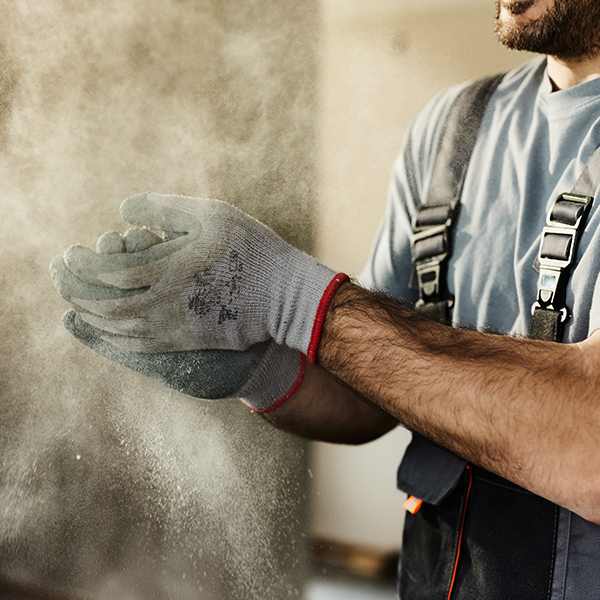 Fortunately, we don’t see asbestos dust the way we used to, because no major manufacturer uses it in brakes or clutches anymore. And fortunately, the worst type of dust, such as lead and silica, aren’t the major hazards they once were. Only very old car paint will contain lead. Silica is no longer found in body filler or buffing compounds. On the rare occasions you do any blasting, it’s probably with coal slag (Black Beauty, Black Diamond). But breathing too much dust of any type is bad for your lungs.
How are you managing dust in the workplace? Are you removing it or just moving it around? Do you blow it off with compressed air? That’s certainly one of the quickest and most common ways to remove dust from a surface. But the compressed air doesn’t remove the dust. It simply moves it from one location to another. Heavier particles fall and settle quickly, creating additional surfaces that need cleaning. Smaller particles linger in the air for hours while you and your colleagues breathe them in. Those smaller particles, the ones that are hard to see, are the most damaging to your health.
How can you control dust in the workplace? The answer, my friends, is not blowin’ in the wind. The answer is to apply a set of controls. Start with the most effective ones first.
Look at alternatives to using compressed air for cleaning. Dust capture tools, attached to grinders and sanders, remove the dust when it is created. They keep your shop from getting a fine dust layer over everything. They can speed up the work, too, because employees don’t need to stop what they’re doing to blow off the dust. You don’t need to stop all work periodically to clean the shop. You won’t have to replace air filters as often. You won’t have to worry as much about dust damaging your paint jobs. Capturing the dust at the source also reduces the fire risk from combustible dust, such as that from body filler.
You can use water to control dust. When asbestos brakes were common, that was a recommended way to control brake dust. Mechanics were to spray water with a detergent added to it to wet all brake and clutch parts and then wipe down the parts with a rag, to be disposed of as asbestos waste. People who work with stone or concrete routinely do it wet, too. The water they use controls silica dust, as long as the dust isn’t allowed to dry out. Is that feasible for your work? Probably not for sanding. But it could be an option if you’re machining brakes or even if you need to do some abrasive blasting.
Why were mechanics using water with a detergent added? Because detergents such as dishwashing liquid make water wetter. They reduce the surface tension of water, making it more effective as a dust suppressant.
If you can’t capture the dust when it is created, you can vacuum it up. But use a vacuum with an efficient filter, so fine dust doesn’t come in one end and go out the other. Vacuuming cleans the shop floor, but takes a lot of time and effort – and it’s hard to vacuum irregular surfaces such as the clutter on top of tool boxes.
What if those methods won’t work? If you absolutely must blow it, do it right.
Require that everyone use OSHA-compliant air guns. These are designed so that blocking the tip doesn’t make the air hose pop off and whip around. They may have a port in the side of the nozzle, to divert the air flow (don’t let anyone cover that port with tape. Doing so is actually self-defeating, because that port creates a Venturi effect, actually increasing the tip pressure during normal use). Other compliant guns may have star-shaped tips or solid tips, with the air coming out from behind the tip. Those designs make it very hard to block the tip.
Require employees to wear safety glasses and hearing protection if they must use compressed air. The flying particles will get in the eyes. The air itself is usually loud enough that it can damage hearing in minutes. There are air blow guns designed to be quiet (Silvent and Exair are two manufacturers of quieter compliant air guns), but they are more expensive. We rarely see those in the shops we visit.
Strongly discourage employees from using compressed air on themselves. That’s how people blow air into skin breaks, leading to infections. And never let anyone turn a blowgun on someone else.
Automotive work can be dusty. But there are better options than putting that dust back in the air.
OSHA safety grants have funded dust capture systems. For information about those, about dust control and evaluation or for other safety issues contact CHESS at (651) 481-9787; toll free at (877) 481-9787, or carkey@chess-safety.com.
Want more? Check out the December 2025 issue of AASP-MN News!