
Is the No Repair Mindset on the Rise?
by Alana Quartuccio
They sure don’t make them like they used to.
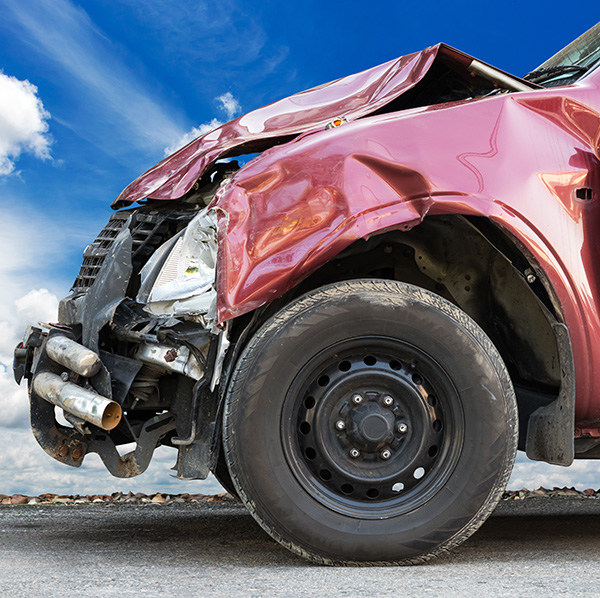 When it comes to today’s vehicles, the phrase “computers on wheels” has basically become a thing of the past. ADAS is more or less standard in vehicles today. Not only has its presence increased but ADAS has been credited with substantially changing how often the average driver gets into an accident. What was once every seven to eight years is now once every 18 years.
Now, vehicle technology is shape shifting once again. As AASPMN News reported last month (see grecopublishing.com/aasp0926coverstory/), evolutions in vehicle manufacturing with megacasting could suggest a whole new world for the automotive repair space with new pressures and learning curves. Meanwhile, total loss frequency continues to increase, climbing as high as 23.1 percent this past March according to CCC Intelligent Solutions.
While this industry has surely had its fair share of changes and challenges, it always finds a way to adapt. But with shops across the country already feeling a slow down, a new wave of vehicle construction coming down the pike and nearly one out of every four damaged vehicles declared a total loss, one can’t help but wonder – are we moving toward a non-repair mindset?
According to Mike Anderson (Collision Advice), while vehicle repair may be changing, it’s not fading away. “Some people question if we are entering into a throw-away car segment but I don’t think we are there right now,” he observes.
He acknowledged new manufacturers like the Jeff Bezos-backed Slate (which is turning out basic electric pick-up trucks for not much more than $20,000) or Chinese automakers making inexpensive electric vehicles that are likely to be totaled after a collision. “With vehicles worth only about $20,000 to $25,000 you will see a lot of more total losses, but with the average vehicle price being in the high $40,000s, there’s still plenty of repairable vehicles out there. I don’t think we will just be throwing cars away,” he predicts.
Anderson does see change coming in other forms, however. “Do I think we’ll see a reduction in the bigger jobs that we do? Absolutely.” Collision Advice’s analysis of private client data has shown a significant decrease in claims. “Between January and June of 2025, 20 percent of repair orders had 96 hours or more and between January and June of this year, that number was less than 10 percent, so you are going to see less big jobs in the future and more small- to medium-size jobs.”
This means shops need to think about how they will recoup investments into equipment like rivet guns or welders if less big jobs come through the door. Vehicle manufacturing evolution can also mean that equipment could become obsolete after two or three years, leaving shops with more to think about when it comes to making that investment.
“I don’t believe we are moving toward a non-repair mindset, but we are entering an environment where repairability must be considered differently,” I-CAR’s Bud Center believes.
Examining advancements in vehicle manufacturing, he states, “Megacasting consolidates dozens of individual components into much larger single-piece castings, which changes both how damage is evaluated and what repair options may be available. The key question will be what repair procedures OEMs develop and validate for these structures. The collision repair industry has adapted to major construction changes before, including unibody construction, advanced high-strength steels, aluminum-intensive vehicles and electrification. Megacasting represents another significant evolution. The challenge for the industry will be ensuring that repairability, technician capability and consumer affordability evolve alongside vehicle manufacturing technology.”
The advantages for the manufacturers are clear. Megacasting involves fewer components, fewer joining operations, reduced assembly complexity and potentially lower weight and manufacturing costs, according to Center. “For collision repair, however, fewer components do not necessarily mean simpler repairs. Damage that once involved several individually replaceable parts could potentially affect one much larger structural casting. That could change damage analysis, repair planning, replacement procedures, measuring requirements, and the economics of the repair itself. Facilities may also need to consider whether they have the equipment, physical space, and material-handling capabilities required to handle significantly larger components. Ultimately, the impact will depend heavily on vehicle-specific OEM procedures, including whether a casting can be repaired, partially replaced, or must be replaced as an assembly.”
Center emphasizes that megacasting should not be viewed in isolation. “These changes are arriving alongside electrification, ADAS, increasingly complex vehicle electronics, new materials, and joining technologies. A repair decision that appears to involve only structural damage can have implications for multiple vehicle systems. Shops should also pay close attention to repairability information at the individual vehicle and component level rather than making assumptions based simply on the presence of a megacasting. As these vehicles enter the collision-repair population, OEM repair procedures and validated repair methodologies will become increasingly important.”
Repairers will need to evolve with the new changes in manufacturing technologies. “As vehicle construction changes, training, knowledge and equipment must evolve with it,” he states. “Shops should expect an increased emphasis on understanding casting construction and material behavior, damage analysis, dimensional verification, joining technologies, OEM-specific repair procedures, and the interaction between structural repair and the vehicle’s electrical and safety systems.
“Importantly, vehicle makers are already providing approved repair procedures that demonstrate how repairability can be incorporated into these newer vehicle designs,” Center adds. “Depending on the vehicle and location of the damage, those procedures may include techniques such as structural plating, rivet bonding and aluminum welding. As vehicle construction continues to evolve, we expect manufacturers to continue evaluating and validating repair methods that allow damaged components and structures to be safely repaired when appropriate, rather than assuming that a large casting or advanced material automatically requires complete replacement. This doesn’t necessarily mean every shop will immediately need an entirely new equipment package. The requirements will be driven by the vehicles the shop chooses to repair and, most importantly, by OEM repair procedures. Before purchasing equipment, shops should understand their vehicle mix, determine what procedures manufacturers require, and then build their training and equipment strategies around those requirements. The key will be having technicians who can identify the construction methods involved, locate and understand the OEM procedure, and then execute that repair using the required training, equipment and processes.”
Anderson maintains it’s less about moving away from repairability and more about seeing a shift in technician skill set. “Shops will always need technicians, but maybe there will be less need for what many call A-technicians. There will always be a need for technicians to do things like assembly and disassembly, but the skill set that technicians will need in the future is going to shift.”
“The best thing a shop can do today is build adaptability into its business,” suggests Center. “That begins with technician development, access to current OEM repair information, strong repair-planning processes, and an intentional strategy for tooling and equipment investment. Staying current with OEM requirements and understanding which vehicle technologies are entering the shop’s market will also become increasingly important.”
Less work at shops around the country has stirred conversations about diversification, with alternative revenue streams leading to new opportunities. “I think we’ll see more shops diversify by bringing glass work in house and mechanical work such as alignments and suspension,” Anderson foresees.
Center agrees that alternative revenue streams make sense for some businesses, but diversification is not a substitute for preparing for the future of collision repair. “Instead, shops should first determine what they want to be able to repair. It may no longer be practical for every facility to repair every vehicle. Some businesses may specialize, some may invest heavily in OEM certification and advanced structural repairs, and others may choose to build partnerships for work requiring capabilities they don’t maintain internally.”
Another shift to keep in mind is how the industry views the changes coming forth.
“I would characterize it less as a non-repair mindset and more as a shift toward a more specialized repair environment,” says Center. “There is a legitimate concern that consolidating many components into a single casting could affect repair-versus-replace decisions and potentially lead to total-loss decisions in certain collision scenarios. At the same time, based on our interactions with vehicle makers, we are seeing a strong interest in finding opportunities to make vehicles more repairable, not less. OEMs recognize that repairability can directly affect whether a damaged vehicle can be economically returned to service or become a total loss.”
“We’ve seen the industry successfully adapt to major changes in vehicle construction before, and there is every reason to believe it will adapt again,” Center observes. “The successful body shop of the future may look different, though. Knowledge, specialization, access to repair information, advanced damage analysis, technician competency and adherence to OEM procedures will become increasingly important competitive differentiators.
Ultimately, I believe the future is not about eliminating repairs. It’s about developing safer, more technically advanced and economically viable ways to repair increasingly complex vehicles, with vehicle makers and the collision repair industry working together to ensure repairability remains part of the conversation as new technologies are introduced.”
Want more? Check out the October 2026 issue of AASP-MN News!