
Miles Per Vehicle Down & Odometers Up in 2025 & 2026 versus 2019 New Market Growth Dynamics
In 2025, the typical U.S. car and light truck traveled nearly 400 fewer miles than in 2019, the year before the historic COVID-19 2020 mileage plunge accelerated a years-long trend of sputtering annual miles per vehicle.
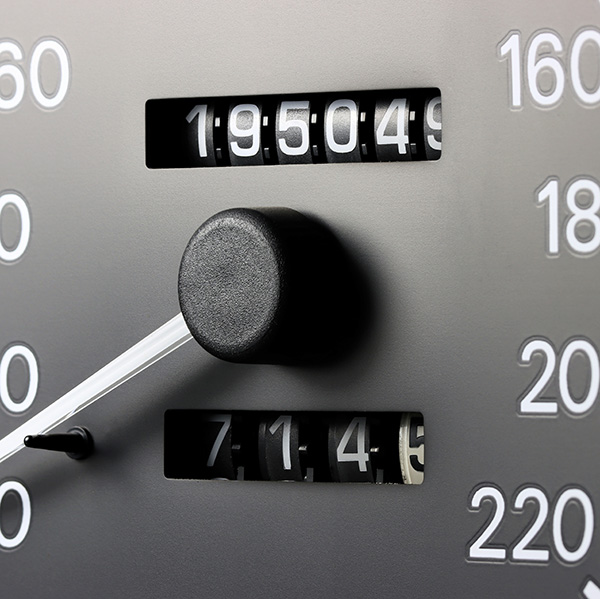 Lang Marketing projects that miles per vehicle in 2026 will increase only a small amount at best, keeping average vehicle miles in 2026 well below 2019 levels. At the same time, car and light truck odometer readings reached an all-time high last year and are set to climb to a new record in 2026. See the all-new 2027 Lang Aftermarket Annual for a 10-year analysis of the total annual mileage on U.S. roads, the changing yearly miles per light vehicle and their odometer readings, and how this affects aftermarket annual product volume.
VIO and Miles per Vehicle
Last year, the number of light vehicles in operation (VIO) increased at a slightly slower pace than total miles driven by cars and light trucks.
As a result, the average car or light truck was driven moderately more miles in 2025 than in the previous year but remained significantly below 2019 levels.
Over a Trillion Miles Lost
Over the past six years (2019 to 2025), the nation’s light vehicle population increased by four percent.
At the same time, the annual mileage of cars and light trucks in the U.S. increased by only about one percent.
As a result, there was a total “loss” of over one trillion light vehicle miles during these six years, based on the increased number of cars and light trucks on the road each year and their lower annual miles versus 2019.
Fewer Miles but Higher Odometers
Fewer miles traveled by the average car and light truck should negatively impact aftermarket product volume. However, while the average vehicle’s annual mileage has declined over the past six years, its average odometer reading (accumulated miles) has climbed steadily.
Since vehicles with high odometer readings use more aftermarket products per mile than cars and light trucks with lower accumulated mileage, the decline in annual miles by the average vehicle has been offset by the greater accumulated mileage on vehicles that generate more aftermarket product volume per mile traveled.
Six-Year Mileage Decline Per Vehicle
Average miles per light vehicle fell by 1,600 in 2020 as COVID-19 dramatically changed Americans’ driving patterns. Before 2020, average annual miles per vehicle declined at a more modest rate, by about 200 miles from 2015 to 2019.
Soaring Odometers
As the average age of cars and light trucks climbed rapidly between 2019 and 2025, adding more than a full year, the accumulated miles per vehicle, recorded by their odometers, reached historically high levels.
From 2019 to 2025, the average light vehicle odometer reading increased by about 10 percent. As accumulated mileage increases, cars and light trucks require more repairs per mile on average.
Continuing Average Annual Mileage Trend
Lang Marketing expects the average vehicle’s annual mileage to increase moderately in 2026 compared to last year. However, the average vehicle’s annual mileage in 2026 will remain far below the 11,600-plus miles recorded in 2019.
New Aftermarket Growth Dynamics
Older vehicles, with higher odometer readings, average more repair and maintenance product use per mile than newer cars and light trucks, which have accumulated fewer miles.
Lang Marketing expects the number of older vehicles in the U.S., particularly those over 15 years old, will continue to increase throughout the decade, increasing the average vehicle’s odometer level (accumulated mileage). This will help boost aftermarket light-vehicle product volume through the end of the decade, even though the average vehicle’s annual mileage will probably not reach 2019 levels.
Six Major Takeaways
• In 2025, the average car and light truck in the U.S. traveled nearly 400 fewer miles than in 2019, the year before the COVID-19 pandemic caused a plunge in Americans’ annual mileage. This sent a trend of decreasing annual mileage per vehicle into overdrive.
• The nation’s aging light vehicle population saw car and light truck average odometer readings reach record highs last year. With the number of light vehicles topping 15 years old at a record level, the stage is set for odometer readings to soar even higher in 2026.
• Over the past six years (2019 to 2025), the nation’s car and light truck VIO increased by four percent At the same time, the annual mileage of cars and light trucks climbed only about one percent. Consequently, there was a total “loss” of more than one trillion light-vehicle miles during these six years, considering the increased number of cars and light trucks on the road each year and their lower annual miles versus 2019.
• While the average vehicle’s annual mileage has declined since 2019, the average odometer reading (showing accumulated miles) has climbed steadily. Since vehicles with high odometer readings require more repairs than those with lower accumulated mileage, the decline in annual miles by the average vehicle has been offset by its greater accumulated mileage, which generates more repair product volume per mile traveled.
• The soaring odometer reading of the nation’s light vehicles, propelled by their increasing average age, has introduced a new growth dynamic into the nation’s repair industry. This has enabled total aftermarket product volume to climb by more than $28 billion at user-price since 2019, despite the “loss” of more than one trillion miles over that time period, as the average light vehicle has traveled hundreds fewer miles each year compared to 2019 driving levels.
• Lang Marketing expects the number of older vehicles on U.S. roads will continue to increase over the balance of the decade, boosting the average vehicle’s odometer reading (accumulated miles). This will increase light-vehicle aftermarket volume throughout the decade, even though the average vehicle’s annual miles remain anemic compared with 2019 driving levels. See the all-new 2027 Lang Aftermarket Annual for a history of annual driving per vehicle on U.S. roads and light vehicle odometer levels. Over 95 percent of the Lang Annual’s pages present information and analysis found nowhere else. For more information, visit: langmarketing.com/lang-auto-aftermarket-annual-report.php.
Want more? Check out the September 2026 issue of AASP-MN News!