
Choose Your Adventure: Independent, MSO or DRP?
by Alana Quartuccio
Life can surely be an adventure. And in the world of collision repair, that can be quite an understatement.
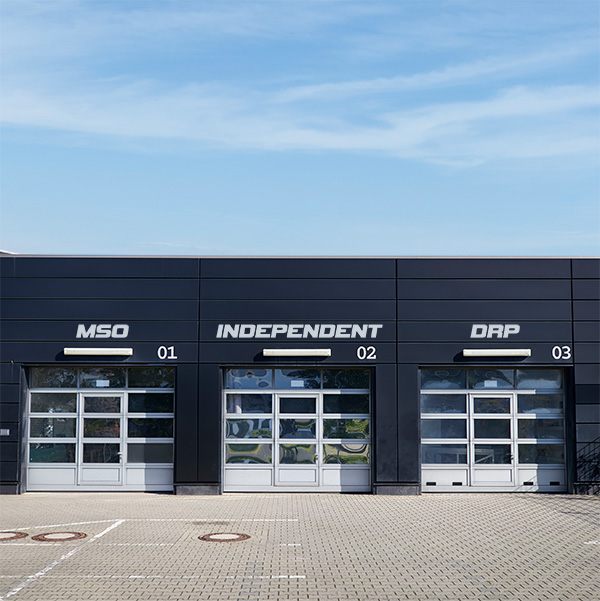 Challenges come in many shapes and sizes. For starters, just take a look at the varied collision repair business models in the US market – it’s quite fragmented. While traditional family-owned or single-owned facilities make up the largest number of storefronts (68 to 80 percent), private equity investments have led to rapid consolidation. Independent/regional multi-shop operators make up eight to 17 percent of storefronts while the national “Big Five” consolidators make up 13.3 percent. According to recent data, even though those “Big Five” only own 13.3 percent, they control about 30 to 32 percent of total industry revenue.
How do direct repair programs (DRPs) fit in? Unlike the aforementioned ownership models, DRPs are insurance partnerships where contractual agreements are made between the shop and the insurance company. The insurer funnels claims to the shop in exchange for standardized rate and cycle time. National MSOs rely heavily on DRP relationships while independent and regional shops do either or. It’s a business decision.
Speaking of business decisions. What would you do if you had the opportunity to trade in what you have now and start all over? If your shop is DRP, would you try to go the non-DRP route? If you’re part of an MSO, would you try to go it independently? Or vice versa?
Do you wonder if the grass is greener on the other side?
New Jersey Automotive polled owners of various different business models and shop sizes to see what they would say when asked:
You’re starting all over. You can have your choic of being strictly independent, a minimum of five DRPs, or being part of an MSO. Which do you pick?
“I’d be an independent shop, and I would definitely have gone the route of learning the business earlier,” says one owner of a 65,000-square-foot facility with five or more DRPs.“I feel like I’m at a point right now where I’m learning something that I should have been more involved with 10, 15 years ago or maybe even earlier than that. Understanding that being a non-DRP shop may be so much harder – but also so much more profitable – I definitely would have liked to have gone that route and not be where I’m at today…still retooling and regearing up on how I have to do this.”
Starting all over may not be on the agenda, but this business owner has made significant changes over the years. “Right now, we’re at about five DRPs but we used to be around 20. We used to have almost everyone under the sun. It’s definitely been a huge change in business. Bottom line, we’re doing the right thing for the industry, and we’re also doing the right things for ourselves. It’s all about quality repairs. We want the best quality for ourselves and the customers. We hold ourselves to a high standard and we weren’t able to meet that standard with certain DRPs. They didn’t want safety inspections. They didn’t want quality work. They didn’t want replacement of parts. It was a very tough battle making that decision to change our philosophy after all those years of running a business that way versus the route that we go on now.”
An owner of a medium-sized shop who has just one DRP tells us, “I would choose to be independent. I probably wouldn’t want to be a DRP. I wouldn’t want to fix cars the way they want you to.
“MSO-wise, you would have the top down coaching and the buying power that they would have,” he added. “I’m not in one, so I don’t really know what you get. But there tend to be people in positions who are not there for the right reasons, if you know what I mean. It’s also all about the numbers not the repair. I still choose to be independent. I can choose my own destiny.”
An owner of a completely independent, non-DRP 3,000-square-foot shop admits the MSO route could be attractive from a financial point of view. “My wallet answers MSO. My conscience answers independent. My conscience knows that I want to do the right thing and the only way I can really perform that is by being independent. My wallet wants the money. Because I don’t have that by being independent, I know that what MSOs do generally toes the line morally and ethically for compensation. The DRP fits in the middle of that. It leans more towards the MSO; the MSO brings more money.”
Some shop owners who have only gone the DRP route champion the benefits and don’t see a reason to choose a different path.
“I choose DRP and the reason is that unless you’re very good at advertising and social media in today’s day and age, it’s guaranteed built-in business,” says a 20,000-square-foot shop owner with more than five DRPs. “You could be as independent as you want to be, but you still need business and you still need customers. So it’s a built-in customer base and then you could still be as independent as you want, building your business in other ways.
“DRP is how I built my business,” he elaborated. “The thing that you need to know when you’re DRP is how to write the estimate properly – that’s where most places fail, because they don’t know how to write a proper estimate. It’s not about charging the amount of money per hour. It’s about writing the right repair. So you have to lay the plan out the right way with a DRP and you have to get paid for everything that you do. Naturally, with DRPs, you get told you can’t write for this, you can’t write for that. But at the end of the day, if you know how to write the right estimate, it can work very well for you.
“If I could start over, I’m not sure I’d do any of them,” an independent mid-sized shop owner offers quite honestly, although his overall pick would be to remain independent.
“I get to make my own rules. I pick and choose who I want to work with. It’s more autonomous.” Unlike others who do see the dollar signs, this shop owner agrees that money is what MSOs are all about. However, he finds that money isn’t his driving force.
“I like being independent. We’re doing alright. Plymouth Rock pays it to the penny, GEICO pretty much pays it to the penny. Progressive, unless they want to be real jerks, pay it to the penny.”
He’s aware of the steering involved with DRPs and chooses to stay away. “We don’t even see State Farm. They steer the s**t out of us, which is fine because they’re garbage. I wouldn’t want [the work]. I can’t believe how well they’ve organized their steering program. Same with Liberty Mutual. They’re real ballbusters. They’re steering so hard to stay away from us. It doesn’t really affect us.”
Another large-sized shop owner shared his take on MSOs in support of his decision to stick with his strictly independent route.
“With the MSOs, you’re just checking the box. There’s no accountability. It has nothing to do with safety, proper repairs. You just become a number and you have to answer to the big MSO management. It goes back to checking boxes for your KPIs, schedule, cycle times. All of that leads to making the insurance company happy.”
The same shop owner shared some strong feelings about DRPs. His own experience led him to believe they tend to control the back end of the repair. He recalled the pressure from the insurer to get his shop to enter the program. “They wanted us as a DRP in the worst way. I didn’t want it. My staff sent in the application and they jumped on it hook, line and sinker.” He found it to be an experience much like having his wisdom teeth removed. “They gave me four pages. A quarter of the first had positives and the other three and a half pages had to do with everything that could go wrong.”
He pointed to the pressures that came with it and how it can feel very much like a trap. “They start putting pressure on you that ‘We don’t pay, we don’t pay, we don’t pay.’ They slowly put a strangle on you, and in the end, if you’re sitting in front of a judge because something went awry, you’re the only one responsible for the repairs. Insurance companies’ influence means absolutely nothing; they will turn on you in a heartbeat and say, ‘If that’s what you wanted, why didn’t you bring it to our attention?’ And your comment is, ‘I brought it to your attention 1,000 times.’
“I’m not saying all insurance companies are bad, but a good portion of them are, and this is how they can control the market. They get what they want through fear and intimidation. Most shops are not smart enough to figure it out. They rely on that or cheat on the back end. They charge for parts they aren’t putting on the car. They charge for services not performed. They will inflate things. I’m not saying that’s what they’re all doing, but I’ve seen plenty to know what I know. That seems to be the outcome.”
Another shared his choice based on having had a hand in all areas throughout his collision repair career.
“Knowing what I know now, yes, I would like a shop with a few DRPs,” offers the owner of a large shop. “After seeing different aspects having been an owner, an employee, and now involved in an MSO, I get to see how they work. You learn how to work the system and work it in order to make it profitable. So if you have the MSO mindset in a small business with a few DRPs, I think you can do very, very well.
“The insurance company is making this industry harder and harder every day and you have to adapt to dance around their rules and make it work,” he observed. “What I learned when I was self-employed was that I stressed about certain things and that drove me crazy. Now that I’ve worked for an MSO and worked for other shops, I see the way they let certain things go. I wouldn’t let certain things leave my shop a certain way. They did, yet their customers are happy, love it and these shops are making money. Having a new perspective on how other people do business kind of opens my eyes to making that decision if I had to do it over again.”
A 20,000-square-foot non-DRP shop owner acknowledges the challenges being independent can bring, but he said he’d choose that option again and again.
“I prefer to be independent. It’s not an easy road to hoe, but I guess no matter what you do, it’s going to be hard. None of it’s easy. But I’ll take where I’m at right now. I’d rather be independent. I control my own destiny. I control the quality. I have final say with the customers. Although they always say be your own boss but you’re not ever really your own boss because you have other people you have to answer to.”
Although he explored DRPs earlier in his career, he believes insurance companies don’t see the shop owner as anything but a money machine via these relationships. “I’ve been down the DRP road and I got rid of them all because you’re nobody to the insurance company. They just want to steal from you. You’re their slave until they can find a cheaper deal somewhere else.”
“Being a DRP did help me get started,” he admits. “It helped me build a customer base but the more they restricted what I was able to charge for and the more they tied my hands behind my back demanding lower quality and cheaper repairs, the more I realized I wasn’t working for myself, I was working for them.”
Observing what it would be like to own an MSO, this shop owner thinks it would be too much to handle. “I don’t know that I would want to own five or 10 shops. There’s just a lot of headaches. There’s probably more money. There’s probably way more money. But didn’t Biggie Smalls say, ‘More money, More problems?’ I’m content. I like what I’m doing. I’m comfortable here. It’s not peaches and cream every day, but at least it’s a family business and we’re working for ourselves. We control our product. We have good relationships with our customers. We have great reviews, we have good certifications. I love where I’m at. I don’t think I would trade it.”
“I get contacted by MSOs all the time,” a large shop owner reports. “It happens every day. I got a call today, in fact. I was just offered retirement, generational wealth, but we decided we’re not going to make that decision. We’re going to stick to our guns and keep working hard and figure this out. People may think that’s a hard offer to turn down, but not for me. I like what I do. I like the challenge and I like the struggle. I like to fight for what we need and what we need to get. I just enjoy what we do.”
What’s your take? Would you do it all over again differently or stay the same? Email your thoughts and feedback to Editorial Director Alana Quartuccio at alana@grecopublishing.com.
Want more? Check out the November 2026 issue of New Jersey Automotive!