
What the Flock!
by Steve Krieps
The Camera Captured a Moment. It Did Not Understand the Event.
Editor’s Note: For a full clickable list of additional resources referenced throughout this article, please scroll to the end, or click HERE.
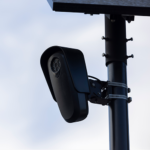 In my small corner of the world in Putnam County, West Virginia, the news and social media have been packed with debate over Flock Safety cameras. (For those unaware, Flock Safety cameras are Automated License Plate Reader (ALPR) systems used to record and track vehicle movements.) The Putnam County Sheriff’s Office entered into a contract with Flock Safety in June 2025, with plans to install eight cameras throughout the county. Several cameras were installed before many residents even knew the system existed.
After public concern grew, Sheriff Bobby Eggleton stated in an interview with local news that the system had not been activated, no data had been transmitted, and it would remain inactive while officials conducted further research and public education. He also said the public would be notified if the system were activated. How nice to pause after it was revealed.1
At the same time, residents have shared videos they believe show infrared lights responding as vehicles pass. The kind that indicates that equipment is powered or detecting activity. Now, some may say that does not necessarily prove that images are being recorded, stored or transmitted, but it sounds like a duck, so…
Regardless, the public is asking legitimate questions about government surveillance, privacy, public consent, who can search for the information, how long it is retained and what prevents it from being misused. Elsewhere in West Virginia, and around the US, the controversy has become heated enough that people have been accused of physically cutting cameras down, placing “Cut here” stickers and some hanging a small Gaston flag in defiance.
Now, I am going to take a hard right from where most of that discussion has been focused, and what most have been thinking. I am not here to tell you whether Flock cameras are good or bad. You can make that decision for yourself. Instead, I want to focus on something that could affect ordinary people more deeply, and more financially, than many may realize.
If you know me, you know I have spent most of my professional life – over 20 years – working in automotive collision repair, insurance claims, appraisals and claim disputes. Because of that experience, when I see a system capable of photographing vehicles, identifying license plates and visible characteristics and turning those observations into usable data, I do not think only about government surveillance. I think about evidence of proof of loss.
I think about how that may eventually enter an auto insurance claim, and who – or what – will interpret it. I think about what happens when an AI-assisted claims system reaches a conclusion based on an image the consumer may never be allowed to see, examine or meaningfully challenge.
When surveillance becomes evidence
Let’s start with a simple question: How do vehicle history report companies obtain their information?
CARFAX says it receives information from more than 151,000 sources, including federal and state agencies, police and fire departments, auctions, fleet and rental agencies, and others. It then associates that information with a vehicle identification number and compiles it into a report that can affect whether someone purchases a vehicle and what that vehicle may be worth.
That does not mean every data point is complete or correct. CARFAX itself cautions that its reports are based only on information supplied to it and should be used alongside an inspection and test drive. Couple that with new headlines like:
• CARFAX-UVeye Integration Gives Dealers Deeper Insights in Service Lane2
• RMS Automotive Adds Carfax Search to Digital Sales Platform3
• Ford Pauses Pilot Program with Carfax After Receiving Industry Feedback4
Which is interesting to say the least, but the larger point is that information collected for one purpose can travel, be aggregated and later influence decisions in an entirely different setting.
Now consider what happens during an automobile insurance claim. An insurer may consider photographs, dash-camera recordings, surveillance footage, police reports, vehicle data, recorded statements, estimating-system information, prior claims information, vehicle-history reports, and other evidence when determining how a loss occurred, whether damage is related to it, who may be responsible, and what the insurer believes it owes. Recently in March, ABC7 in California reported, “Santa Ana homeowner says insurance company used a drone to inspect her roof without telling her.”5 Before you suggest that’s just home insurance – which I’ll let sit for those who understand – how about “Surveillance video shows alleged staged crash in Sunny Isles Beach insurance fraud case, cops say”?6
Now maybe gathering that evidence is a good thing. Claims should be decided based on facts, and fraud costs us all money in the long run right. But what happens when a Flock camera, a drone, your own vehicle data captured through an app or third-party device, does not capture the collision itself but does capture your vehicle a few minutes before it happened?
What happens if an image appears to show a dent, reflection, discoloration, missing component, or other distinguishing feature? Now does a person or an AI system interpret that image as evidence that the claimed damage existed before the collision?
Imagine being told after a traumatic event like a collision: “We do not owe for that damage because information obtained during our investigation indicates it was pre-existing.”
Can you obtain the original image?
Can you see the full-resolution version instead of a screenshot or someone else’s description of it?
Can you review the date, time, location, metadata, image quality, camera angle and complete context?
Can you learn whether a trained professional examined the evidence or whether software compared it with your claim photographs and generated a flag?
Were other photographs or data points considered?
Most importantly, are you given a meaningful opportunity to reach the conclusion before it affects your claim?
Flock, for example, says its cameras can capture license plates and vehicle characteristics such as make, model, color, time, location and visible distinguishing features. It also says its customers control access and sharing, with data deleted after 30 days by default unless a different retention period is established under the customer’s contract, law, or policy. Flock explains its system and retention practices on its website.7
I have not found evidence that insurance companies have direct access to Flock’s network, and I am not claiming that they do. What I am asking is: Could they? We all have heard the phrase, ”Where there is a will, there is a way.” Again, no proof, just daydreaming.
But regardless, information gathered or preserved by law enforcement can potentially find its way into police reports, investigation files, litigation, or other data systems that may be subject to a FOIA request. (And ultimately, maybe into an insurance claim file.)
Once that information leaves the original system, who controls how it is interpreted, summarized or reused? What happens to the one-night regret of a social media post once you send out to the interwebs? And sometimes the camera does not know or tell the whole story.
A recent situation involving a Ford employee demonstrates the danger of treating a limited observation as the complete story. Surveillance footage appeared to show an 11-year employee taking a $1.95 cookie without paying, and he was fired for it! What the footage did not establish was that the payment had been completed. His bank records later proved that he had paid, and Ford offered to reinstate him with back pay.8
The camera captured a moment. It did not understand the event.
The Ford case was not reported as an AI decision. That makes the lesson more important, not less. Human decision-makers saw limited videos, treated them as conclusive and imposed a life-changing consequence without first obtaining the full story. No questions, no investigation, just a big old Appentice-style, “You’re fired,” followed by being escorted out by security. The error was not necessarily in what the camera recorded. The failure occurred in the interpretation, investigation and decision that followed.
Now add AI to that process.
A camera captures a vehicle before a collision. Software identifies what it believes is a dent, discoloration, missing component or distinguishing feature. An automated claims system compares that image with the claimed damage and generates a pre-existing-damage flag. Then someone accepts the system’s output without closely examining the original image, questioning its limitations or asking the vehicle owner for an explanation.
Don’t think that’s going to happen? Ok, well…ask yourself about the touted reasons behind why companies are running to AI. It is simple: They face market pressure to maximize productivity and lower costs. Now, add in the fear of falling behind because “everyone is doing it!” (funny how that’s a lesson we teach kids to avoid), and you have a fast-paced toxic environment brewing. But surely people would make sure the right decisions are being made. I mean, come on, let’s be real. Let’s poke at that for a second.
Harvard Business Review published an article in June 2026 titled “Employees Aren’t Questioning AI Advice Enough” to summarize a study that found people readily sought AI-generated recommendations but were far less interested in understanding how the AI reached them – especially when questioning whether the recommendation could threaten their financial interests or reveal possible bias. Those who reviewed the AI’s reasoning were more likely to challenge its recommendation. The lesson is clear: Simply placing a human in the loop does not create meaningful oversight. Effective oversight requires qualified people who are trained, required and empowered to examine the evidence, question the system’s reasoning and override it when necessary.9
Not enough to get the juices flowing? Fine. Let’s add what Business Science Daily reports: “Speed vs. Accuracy: The Productivity-Quality Trade-Off of AI.”10 They found that AI significantly improved performance when used for tasks within its capabilities: participants completed 12.2 percent more tasks, worked about 25 percent faster, and produced work rated more than 40 percent higher in quality. However, when the assignment required recognizing hidden context and nuances AI missed, AI-assisted consultants were 19 percentage points less likely to reach the correct conclusion. Most concerning is that their incorrect answers were still polished and persuasive, making the errors harder to recognize. A lesson that AI may work faster and be convincing without it being correct. Its output must be evaluated by qualified professionals who understand the subject, verify the underlying facts and know when the task exceeds the technology’s capabilities.
Just for fun and context, ConsumerAffairs data11 suggests that approximately 11.9 million collision claims were filed annually in the United States as of 2021. Now, let’s use the 19-percentage-point decline in accuracy identified in the Business Science Daily report as an intentionally simplified point of reference. If an error rate of that magnitude translated into inaccurate claim denials or decisions, approximately 2.26 million claims could be affected.
CCC’s Crash Course 202612 reports an average total cost of repair of $5,295 for vehicles four to six years old. For discussion purposes, I am going to use $4,800, considering that the average vehicle on the road is now 12.8 years old. Use whatever supported figure you believe is more appropriate.
At 2.26 million claims and an average of $4,800 each, the potential financial impact would be approximately $10.9 billion – with a B.
Now, where was I…Oh, yeah! The camera may accurately show something. The AI may accurately identify a visual difference, and yet the conclusion can still be completely wrong because neither knows the full story. A dark area may be damage, shadow, dirt, glare, reflection, image compression or something else entirely. Even if actual damage is visible, the image may not establish what caused it, when it occurred, whether it is related to the claimed loss, or what the insurance policy and applicable law require.
An image is evidence. The interpretation of that image is still an opinion. AI can sound confident and still be wrong. This is not a hypothetical concern about whether artificial intelligence can make mistakes.
The article “32 Times Artificial Intelligence Got It Catastrophically Wrong”13 collects examples involving false information, facial-recognition errors, dangerous recommendations and automated systems reaching conclusions that were not supported by reality.
Oddly enough, the point here is not to shame AI or pretend it has no value. AI can process information quickly, identify patterns, organize records, compare photographs and help professionals identify questions requiring further investigation. But assistance is not judgment. And the presence of a human somewhere at the end of an automated process does not necessarily mean meaningful human review occurred.
Courts are already learning that lesson.
Can’t happen in professional industries, you say? In Mata v. Avianca, attorneys submitted nonexistent judicial opinions and fabricated quotations generated by ChatGPT. The court imposed a $5,000 sanction. It explained that there was nothing inherently improper about using a reliable AI tool for assistance, but attorneys remained responsible for ensuring the accuracy of what they submitted.14
In Wadsworth v. Walmart, attorneys filed motions citing nine cases, eight of which did not exist. The nonexistent cases had been generated by an AI platform and were not independently verified. Three attorneys’ electronic signatures appeared on the filings, even though two reportedly had not been given the motions to review before filing. The court-imposed fines totaling $5,000 and removed the attorney who prepared the motions from the case. Read the court’s decision in our online resources.15
Those cases did not establish that AI has no legitimate place in professional work. They established something far more relevant: A professional’s name or signature at the end of an AI-driven process does not prove that meaningful professional review occurred. The lawyers were trained, licensed professionals. Their signatures carried legal responsibility. But a signature without actual review did not protect the court, the opposing parties or their own clients from false information. Licensing alone is not enough. The professional must actually perform the work the license and position require.
What meaningful human review should mean
The same principle applies to automobile claims. Placing a licensed adjuster somewhere in the process is not enough if that person merely accepts an automated damage flag, estimate, valuation, liability assessment, fraud indicator or coverage recommendation without examining the underlying evidence and testing the system’s conclusion.
Meaningful review requires a trained, properly qualified, and, where required by law, licensed professionals who:
• Understands the evidence and its limitations.
• Knows what the system evaluated and what it did not.
• Independently verify material findings.
• Apply the policy and applicable law.
• Gives the consumer a fair opportunity to provide contrary information.
• Explains the factual basis for the decision.
• Possesses the authority and willingness to reject the system’s output.
• Can be held accountable for the final conclusion.
This matters because automobile claim decisions affect real lives. An incorrect decision can determine whether someone can repair a vehicle, replace it, return to work, transport children, attend medical appointments or meet the basic needs of a family.
Consumers purchase insurance expecting claims to be decided according to the policy, the law and the complete evidence, not according to an undisclosed inference generated by a system they cannot inspect, question, or correct.
Who is accountable when the system gets it wrong?
The National Association of Insurance Commissioners has recognized that AI is already being used in claim management and fraud detection – and that these systems create risks involving inaccuracy, unfair discrimination, data vulnerability and a lack of transparency and explainability.
Its model bulletin makes an especially important point: An insurer’s actions must comply with applicable insurance laws regardless of the method used to make or support the decision. In other words, technology does not eliminate responsibility.16
A company should not be able to avoid accountability by blaming an algorithm, a vendor, a data provider or an automated workflow.
A consumer cannot cross-examine an algorithm. A regulator cannot discipline a computer program. A court cannot place AI under oath and ask why it interpreted an image as prior damage, ignored conflicting evidence or recommended denying part of a claim.
Someone must be able to explain what evidence was used, what role AI played, what independent review occurred, why contrary evidence was rejected and who accepted responsibility for the final decision.
Without those answers, the consumer is not challenging a decision on equal ground. The consumer is attempting to disprove a hidden process. That is not transparency. That is not meaningful human review. And it is certainly not professional accountability.
I am not telling you whether Flock cameras or AI-assisted claim systems are good or bad. You can make that determination for yourself. I am asking us to recognize that this debate is much larger than whether the government can see where a vehicle traveled.
It is about transparency, due process, access to evidence, professional responsibility, and whether we are willing to let automated systems make decisions that materially affect people’s lives without genuine judgment and accountability.
Cameras and AI can be valuable tools in the claims process, but they should never become substitutes for the trained professional responsible for making the decision right. The camera may capture a moment. AI may analyze that moment. But neither one necessarily understands the full event.
That is why the final decision must remain in the hands of a professional who does.
1. Putnam County officials reevaluating Flock Safety partnership after public concerns (ABC8 Fox Appalachia)
2. CARFAX-UVeye integration gives dealers deeper insights in service lane (Auto Remarketing)
3. RMS Automotive Adds Carfax Search to Digital Sales Platform (Manheim by Cox Automotive)
4. Ford pauses pilot program with Carfax after receiving industry feedback (Repairer Driven News)
5. ABC7: Santa Ana homeowner says insurance company used drone to inspect her roof without telling her
6. Local10.com: Surveillance video shows alleged staged crash in Sunny Isles Beach insurance fraud case, cops say
7. How Flock Protects and Manages Data (flocksafety.com)
8. Ford worker fired over alleged cookie theft (Phoebewallhoward.com)
9. Harvard Business Review: Employees Aren’t Questioning AI Advice Enough
10. Speed vs. Accuracy: The Productivity–Quality Trade-Off of AI (Business Science Daily)
11. ConsumerAffairs: How Many Car Insurance Claims Are Filed Each Year? (2026)
12. CCC Crash Course 2026: Complexity Compounds
13. Yahoo!tech: 32 times artificial intelligence got it catastrophically wrong
14. Read the court’s sanctions order in Mata v. Avianca (Justia Law)
15. Court decision regarding Wadsworth v. Walmart (FindLaw)
16. National Association of Insurance Commissioners Model Bulletin on AI (NAIC.org)