
Total Loss Tips
by Justin Petty
I’m going to veer away from our normal Ask the Expert format this month and revisit an old favorite: total losses.
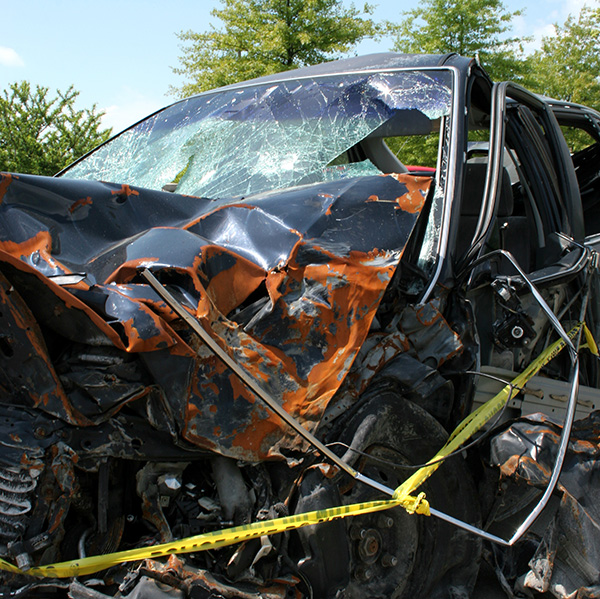 Years ago, I wrote “Total Loss Settlement Tips,” one of my most-read E-zine articles. Most of that advice still holds up, but today I’d start with one question: Whose insurance company are we dealing with?
A first-party claim is against your own insurance company. A third-party claim is against the liability carrier for the person who caused the loss. Same wreck, same totaled car, but two very different ways to resolve the value dispute.
Get the Complete Valuation Report
Whether it is first-party or third-party, start here. If the carrier says the vehicle is worth $27,842.16, don’t start by arguing that it is worth $35,000. Ask how they got $27,842.16 and get the complete valuation report.
Check the year, trim, drivetrain, mileage, options, condition, comparables and adjustments. I’ve reviewed thousands of these reports, and mistakes are not unusual.
First-party: Point out the legitimate errors, provide good supporting evidence and give your carrier a fair chance to fix it. But don’t argue forever. Once you’ve shown your hand, they’ve shown theirs, and you’ve reached an impasse over value, invoke appraisal. That is exactly what it is there for.
Third-party: This is where negotiation matters more. You generally cannot invoke appraisal against somebody else’s insurance company. Give them the better comparables, explain the errors and make a reasonable counter. You may need to negotiate longer because if they simply won’t budge, the road can eventually lead to litigation.
Make Sure the Comparables are Actually Comparable
Same year, make and model does not automatically mean comparable. Trim, mileage, drivetrain, equipment, condition and location all matter. The goal isn’t to find the three most expensive cars online; it is to find the best evidence of what that vehicle was worth immediately before the loss.
First-party: Make your best case. If the carrier still won’t move enough and the dollars justify it, stop sending the same argument back and forth and invoke appraisal. Appraisal can turn a months-long argument into an actual process for resolving the amount of loss.
Third-party: Those comparables are your negotiation leverage. An appraiser like me can establish a supportable value and explain why the carrier’s number is wrong, but I can’t force a third-party carrier into appraisal. That makes good evidence – and the claimant’s willingness to keep pushing – more important.
Condition Matters, But Prove It
Everybody thinks their vehicle was in great condition. Photos, maintenance records, service history, recent tires and other documentation can help prove it. That doesn’t mean a $2,000 repair adds $2,000 to value, but a truly exceptional low-mileage vehicle shouldn’t automatically be treated as average either.
First-party: Submit the proof. If the carrier disagrees and the difference materially affects value, that is something the appraisers can evaluate.
Third-party: You may have to sell the point a little harder. Good documentation gives the adjuster a reason to move, because there isn’t an appraisal process waiting in the wings.
Know When to Stop Negotiating
This may be the biggest tactical difference between the two claims.
First-party: Negotiate long enough to identify the dispute. If your carrier says $25,000, your evidence says $31,000, you explain why and they still stand at $25,500, we’ve probably learned everything we need to learn. Invoke appraisal and move on.
Texas now requires qualifying personal auto policies issued or renewed after January 1, 2026 to include appraisal for disputes over the amount of loss. Appraisal wasn’t new to Texas total losses – most policies already had it – but now it is required. Robert McDorman deserves a lot of credit here. He was instrumental in pushing the legislation that protected meaningful appraisal rights in Texas, particularly so repair disputes could not simply be carved out of the process.
Third-party: Here, negotiation is more reasonable because there is no contractual appraisal shortcut. Counter again if it makes sense and ask for supervisory review. Provide a professional valuation if the dollars justify it but eventually the claimant has to decide whether the difference is worth the risk and expense of litigation. That’s a much bigger hammer than appraisal, so naturally you may negotiate longer before reaching for it.
Don’t Ignore Salvage
If you’re keeping the totaled vehicle, pay attention to the salvage deduction. A $30,000 ACV with $5,000 salvage is a very different settlement from the same ACV with $12,000 salvage. Ask how the salvage value was established and whether there is an actual bid behind it.
First-party: If salvage materially affects the amount of loss and you disagree, make sure it is part of the dispute you present to your appraiser.
Third-party: Challenge it through negotiation and supporting evidence, but remember the same limitation applies: an appraiser can help prove the number, not force the liability carrier to accept it.
Do the Math Before You Fight
A $500 dispute and a $10,000 dispute shouldn’t be handled the same way.
First-party: The availability of appraisal changes the economics. Once you reach an impasse, there usually isn’t much sense spending another month arguing with an adjuster when the policy gives you a process designed to resolve the disagreement.
Third-party: The economics are tougher. A professional appraisal may improve the offer, but if the carrier still says no, the next step may mean an attorney and litigation. Sometimes that fight makes sense. Sometimes it doesn’t.
The Bottom Line
On any total loss, get the valuation report, check the vehicle information, examine the comparables, document condition, understand the salvage deduction and know what the vehicle was actually worth.
But before deciding how hard – or how long – to fight, remember whose insurance company you are dealing with.
On a first-party claim, present your evidence, reach the impasse and use appraisal.
On a third-party claim, good evidence and good negotiation matter more, because the road beyond negotiation can lead to litigation.
Same totaled vehicle. Same disagreement over value. Two very different ways of getting it resolved.
Want more? Check out the October 2026 issue of Texas Automotive!