
Adam Ioakim Still Fighting the Good Fight Behind the Scenes
by Alana Quartuccio
The Massachusetts auto body industry is fortunate to have so many passionate people fighting for what’s right when it comes to fair reimbursement rates and safe and proper repairs. Hogan and Van Auto Body’s (Medford) Adam Ioakim most certainly fits that bill!
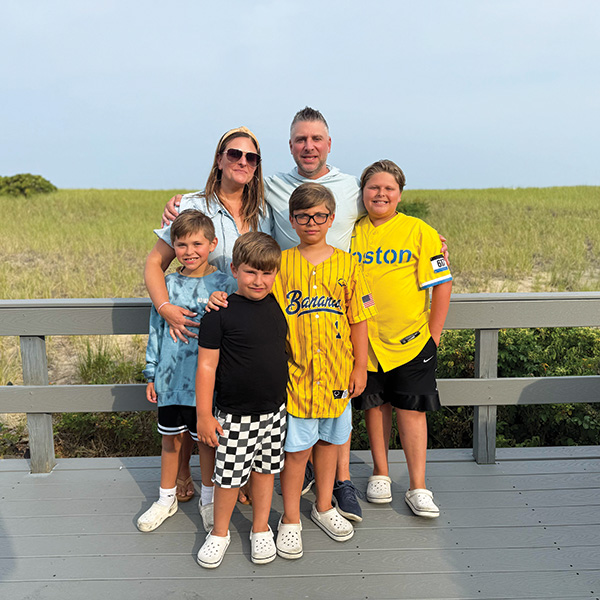 He has served on the association’s Board of Directors, fought for labor rates at the Capitol and stood up for his fellow Commonwealth collision repairer and consumer rights. New England Automotive Report usually sets out to catch up with those who have retired or ventured into other paths, but this month, we catch up with Ioakim; although he hasn’t left the shop or the industry, he has taken a bit of a behind-the-scenes approach to fighting the good fight as things are quite busy at home! (Hint: he has four young children). Read on to find out what he’s been up to!
New England Automotive Report: Tell us how you first got started. What interested you in a career in auto body?
Adam Ioakim: I grew up around the family business that my father, Andy Ioakim, owned. During high school, I’d work at the shop during the summer. I went on to Bentley College to earn a business degree. Initially, I didn’t want to go into the body shop business, so I sought some corporate experience running a sales territory in San Francisco. After a few years, I began to wonder if maybe the grass was not greener on the other side and started to consider coming back to the family business. Somewhere around 2004 or 2005, my father reached out to see if I would consider coming back. A couple of years earlier, my brother George had made the decision to transition into the business. At this point, my father was starting to think about retirement and suggested that now would be the time to come back, so I would have the opportunity to work alongside him and download his knowledge and experience.
My interest in the field never came from a love for cars but rather a love for this business, our family business. So, I made the decision to come back and learn all the things about the business I hadn’t learned when I worked at the shop in high school.
NEAR: When did the shop initially get its start?
AI: The shop has been in business since 1938. My father worked for the original owners in the 1970s and bought it from them in the early 1980s. My brother and I came on board in the 2000s, and by 2011, we officially purchased the business from our father. We co-own it 50/50 and make all the business decisions together. He oversees the accounting, finance and human resources side, and I oversee the production side of things with repair planning and insurance. We don’t participate in any insurance referral programs at all. We do not do DRPs. I also oversee marketing for the shop. It’s all interchangeable, but those areas are what we each focus on.
NEAR: At one point, you were pretty heavily involved with association work. When did you first get involved with the auto body association?
AI: I felt I needed to get involved right away. My dad took me to a couple of old-school MABA and AASP/MA meetings at the Wakefield Social Club with Tommy Rossin and Rick Starbard – the North Shore crew who were leading the way. Peter Abdelmaseh was executive director of AASP/MA at the time. By attending these meetings, I realized all that the association provides. I quickly saw the value in it and relevancy of what they can do for shops and the consumers of the industry.
NEAR: How did you wind up on the Board of Directors, and what role did you play?
AI: One night after a meeting, Rick and I had a conversation where he just gave me the entire download on everything that was going on in the industry. And at the end of that conversation, he told me the Board could probably use some young blood to come onboard. At this point, the old MABA hadn’t yet merged with CMARA and the Alliance of Automotive Service Providers of Massachusetts (AASP/MA). That would come later on in my tenure. From there, I went to a couple of Board meetings and went through the logistics, and then I was voted in as a Director. During the infancy years of AASP/MA, there were still a lot of mechanical guys on the Board and a handful of collision repairers. Rick Starbard was one of them and really has been a great mentor to me. He took me under his wing and was always there to answer questions and teach me all the acronyms of the various industry associations. Seeing the immediate value in association work, I invested my time right out of the gate and worked my way to vice president, serving under Molly Brodeur.
NEAR: What led you to take a backseat from serving on the Board?
AI: Usually, the president role is the next step for the vice president when the president’s term is up, but before I could consider taking on the role, my family had really grown – I had four kids in five years, so I needed to take a step back and focus on my family. This business is demanding, and I needed that extra time and was unfortunately unable to put that time into the association. I had a conversation with the Executive Board about my not being able to give the time and attention I felt the association deserved, so I had to take a step back.
NEAR: You may have left the Board, but you never really stopped working on behalf of the association. How do you keep up these days?
AI: When I first left the vice president role, I stayed on as a Director-at-Large for a few years so I could still participate and provide input as needed. Even though I’m no longer on the Board, I’ve stayed active communicating with the legislative committee and served on the association’s labor rate action committee with Jack Lamborghini and Brian Bernard. I have regular conversations with Executive Director Lucky Papageorg and our current president, Matthew Ciaschini, and I catch up with Rick Starbard frequently. I’m still available for brain-storming sessions. I attend ADALB meetings in Boston, and my shop is part of a 20 Group.
I do believe that by stepping aside, it paved the way for more new blood to come on and lend fresh ideas. There needs to be an overlap of experienced Board members working with newcomers, so the older and wiser members can pass that knowledge along to the younger guys. I think that really helps set the association up for the future. So, my stepping aside to let some new blood gain some experience is a good thing.
NEAR: What are some of the biggest changes you’ve seen over the past 20 years?
AI: Technology is the number one thing. When I first started, repairs were pretty standard. Now, you have this whole technological piece. Like I-CAR has said, it came in like a tsunami. You have to make sure your shop is equipped to deal with the most up-to-date repair procedures, follow those procedures and be able to recalibrate systems correctly with the right equipment and procedures. Everyone talks about the technician shortage. I don’t think it has gone away, and I don’t believe it’s been resolved, but I do believe there are shops with unique ideas, business models and cultures that have been able to tackle that challenge. I don’t believe we’ll have a giant influx of technicians come along, but hopefully if an increase in the labor rate finally happens, it will help attract more people into this industry.
One challenge that has always been there is the insurance companies. Nothing has changed with them. When I first started, I was told we’d come to some precipice where the technology in the cars would become so difficult, insurance companies would just have to understand it’s our job to follow repair procedures, and they would eventually have to fall in line because there would only be so many shops with the expertise, training and equipment to do these repairs. But that hasn’t happened in 20 years. I’m a shop owner who believes that following repair procedures is the only way. We have certifications, and we continue to invest in equipment and technology. Maybe one day, the insurance companies will realize that the liability falls on the shop and that they need to pass on a fair and accurate wage.
NEAR: What is your favorite thing about this industry?
AI: My favorite thing about the industry is the people: my technicians, customers, all the body shop owners and vendors I’ve met along the way. They are a resilient group. They’re a determined group. They’re a smart group. Everyday, I learn something new, and I love that. Whether it’s vehicle changes or something a colleague taught me – those are the kind of things I love. No day is the same. And it’s fast-paced. I also get to work with my brother everyday!
NEAR: What do you dislike the most?
AI: In big bold capital letters: INSURANCE INTERFERENCE. We are the repairers. It’s our liability. We should be able to fix the car and be reimbursed at an appropriate rate based on our cost of doing business.
NEAR: As someone who has been active with the association since the original MABA days, what are your thoughts on the association returning to the MABA name?
AI: I think the change back is great. Becoming AASP/MA served the purpose at the time, but now that AASP National is no longer around, it makes sense to restore the MABA name. It’s a name that always had a lot of clout and respect back in the day. And it makes sense because it is who we are – we are the Massachusetts Auto Body Association.
NEAR: Any plans to get more active with MABA in the future?
AI: My youngest child is seven, and my oldest is 12, so I’m hoping I can get to a point where I may get some free time back to give to MABA. I truly see the value in the association, and I want to give back. When the time comes, I’ll be itching to help out again.
Want more? Check out the March 2026 issue of New England Automotive Report!