
Is the Cure for ADALB Insanity Coming Soon?
by Chasidy Rae Sisk
If insanity is “doing the same thing over and over and expecting different results,” it has been well-established in past issues of New England Automotive Report that the Auto Damage Appraiser Licensing Board (ADALB) embodies this popular idiom (see online at grecopublishing.com/near0325coverstory and grecopublishing.com/near0425coverstory).
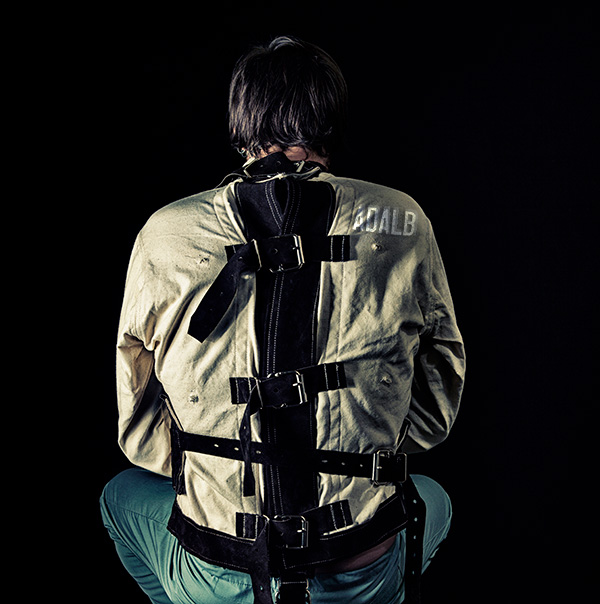 Yet, as House Bill 4806 moves forward and continues gaining momentum, it appears that members of the Massachusetts Legislature may soon be able to add “psychologist” to their resumes as they’ve begun to identify the proper treatment and made leaps toward future relief of the ailment!
HB 4806, along with its companion Senate Bill 285, seeks to move the ADALB from under the Division of Insurance (DOI) to place it under the Division of Occupational Licensure (DOL) which regulates every other professional license in the state, thereby ensuring the Board is positioned to more effectively protect consumers as it was designed to do.
This would be accomplished by amending Section 8G of Chapter 26 of the General Law, which currently reads, “There shall be in the division of insurance an auto damage appraiser licensing board, hereinafter called the Board, consisting of four persons to be appointed by the governor, two of whom shall be affiliated with the auto body repair industry, and two of whom shall be affiliated with insurance companies writing casualty insurance within the Commonwealth, and one person to be appointed by the commissioner of insurance who shall not be affiliated with either the auto body industry or the insurance industry and who shall be the chairman of the Board” [emphasis added to highlight proposed changes].
Under HB 4806, the ADALB would exist under the division of occupational licensure, an important distinction that MABA President Matthew Ciaschini believes would serve to “modernize oversight, fix the structural conflict of interest that has plagued the Board for decades and finally recognize that the auto damage appraiser license is a professional license.”
Furthermore, the amendment seeks to enlarge the Board from five individuals to seven by removing the DOI-appointed chairman and including “two persons to be appointed by the attorney general, one of whom shall be a representative of their office, and one of whom shall be affiliated with an auto body repair shop or an insurance company, and one person to be appointed by the commissioner of the Division of Occupational Licensure who shall not be affiliated with either the auto body industry or the insurance industry and who shall be the chair of the Board.”
Lastly, HB 4806 establishes term limits for Board members: “Appointments shall be for a period of three years, and no member shall be appointed for more than two consecutive terms.”
Ciaschini praises the proposed changes. “It completely rewrites the Board’s composition to ensure balance, professionalism and independence, which is something the current structure has never achieved…finally, a licensing Board that isn’t structurally designed to deadlock, disappear or bend toward insurer interests. HB 4806 finally fixes the systemic failure, not with cosmetic tweaks, but with structural reform!”
MABA’s efforts to effect this ADALB reform and eliminate “partisan voting” has been a long-standing goal for the association, beginning in the 191st Legislative Session (2019-2020) with Senate Bill 182 which was referred to the Joint Committee on Consumer Protection and Professional Licensure but failed to receive its scheduled hearing. Never one to cede defeat, MABA supported the reintroduction of the proposed amendment in the 192nd Legislative Session via House Bill 4242 (the revised and combined version of House Bill 327, Senate Bill 240 and Senate Bill 241) which was favorably reported by the Joint Committee in October 2021 and referred to the House Committee on Ways and Means; however, no further action was taken. Similarly, the next iteration for ADALB reform, Senate Bill 2568, was heard by the Joint Committee and referred to the Senate Committee on Ways and Means but failed to receive a hearing.
The forward momentum evidenced over the years can be witnessed not only in the actual progress made within the Legislature but also by examining the petitioners who have ascribed their support from one iteration of the reform bill to the next. When Senator Michael Rush and Representative Paul McMurty first petitioned for ADALB reform in 2019, Senator Patrick O’Connor later signed on as a sponsor for the bill. In 2021-2022, Senator Rush revived his petition to reform the Board via Senate Bills 240 and 241 and was joined by Senator Brendan Crighton, but the companion House BIll 4242 received support from Representatives Tackey Chan, Paul Feeney and over 50 others from both sides of the aisle. That level of support was renewed in the following and current legislative sessions.
But this year’s bill shows more promise on its path to become law than ever before! Introduced in February 2025 and sponsored by Senator Paul Feeney and Representative Tackey Chan, the current ADALB reform legislation (originally House Bill 333) received its first reading and was referred to the Joint Committee on Consumer Protection and Professional Licensure where a hearing was held in October. After being reported favorably, a revised draft of the bill (now HB 4806) – a common occurrence – was referred to the House Committee on Steering, Policy and Scheduling. There, it received a second reading on December 22 and was referred to the House Committee on Bills in the Third Reading where its contents will be analyzed for legal technicalities and proper citations. As of the time of writing, it has not yet been scheduled for review, but MABA Lobbyist Guy Glodis is cautiously optimistic that a meeting will be scheduled soon.
Once HB 4806 is released from the House Committee on Bills in the Third Reading, it will return to the chamber for a third and final reading and a vote on engrossment. Once engrossed, HB 4806 will repeat the process of three readings and engrossment in the Senate. The penultimate step of the process will see the bill proceed to an enactment vote before it is sent to the governor to be signed into law.
“Change is coming,” Glodis predicts. “We’ve gotten further in this session than we ever have before, and we’re hopeful that the issues we’ve seen over the past couple decades will be resolved soon through the ADALB reform bill. The progress we’ve made is apparent; HB 4806 is sponsored by dozens of legislators who have weighed in and expressed the desire to see these efforts move forward.”
Glodis is also optimistic about the progress that has been made by the Auto Body Labor Rate Advisory Board (ABLRAB), which recently completed its task of submitting a formal report and recommendations to the DOI and key legislators before the end of 2025. “They identified some long-standing issues with the labor rate being paid that need to be addressed, and I’m confident that their final report will effect meaningful change for the auto body community in Massachusetts.” (The ABLRAB’s final report is available at bit.ly/ABLRABReport.)
While waiting to learn what actions will be taken as a result of that report, MABA continues to focus its efforts on ADALB reform, acknowledging that the Board initially made meaningful impacts to appraiser licensure in Massachusetts while still hoping for improvement.
When the Massachusetts Legislature established the ADALB via Chapter 26, Section 8G in late 1981, there’s no doubt that the intentions were positive. Prior to the statute, auto damage appraisers’ licenses were issued directly by the DOI with no testing/educational requirements and without direct input from either the collision repair or insurance industries. The newly-formed ADALB set out to improve the quality of motor vehicle appraisals by establishing a separate government board having the function to license auto damage appraisers, establish standards for obtaining a license and establish standards for the conduct of appraisals, and the statute also gave the Board the power to issue rules and regulations in order to promote the public welfare and safety.
Unfortunately, those efforts have been inhibited by the location of the ADALB under the DOI and the inherent bias that creates. The cure? Reform via HB 4806!
“Once passed, HB 4806 would break the insurance industry’s stranglehold on voting control within the ADALB and finally hold ALL appraisers – staff, independent and shop alike – accountable,” MABA Executive Director Lucky Papageorg insists. “No longer would complaints disappear into a system where they are rarely heard and even more rarely acted upon. Accountability matters, especially when failure to follow regulations can intentionally defraud policyholders and compromise vehicle safety.”
And it’s important to remember that those policyholders and the safety of their vehicles are at the heart of MABA’s efforts as always. “The foundation of the ADALB reform bill has more to do with consumer protection than with the collision industry itself. It’s really about the best way to help consumers in Massachusetts,” Glodis reminds readers. “We have to continue to push our consumer-reform agenda and make the legislators truly know why these bills are important to the public’s well-being.”
“We’ve lived with a broken system for far too long. HB 4806 finally gives us a real shot at fixing it,” Ciaschini adds, urging collision repairers to “Be Part of the Fix in ‘26” by staying involved with subsequent actions the association deems necessary to effect change.
Glodis agrees. “The hard work and continued support of the MABA membership will be key to our success. Once the bill takes the next step, things will move quickly, so continue to foster positive relationships with your legislators and keep open lines of communication.”
Association leadership will be in touch with updates and next steps soon, and MABA encourages everyone to be prepared for action. Be sure to email admin@massautobody.org to sign up for notifications from MABA to make sure you don’t miss instructions on how to help administer the cure for ADALB insanity!
Want more? Check out the March 2026 issue of New England Automotive Report!